Best materials for commercial buildings in Michigan
The quick take
The best materials for commercial buildings in Michigan must withstand extreme moisture, heavy snow loads, and constant freeze-thaw cycles. Structural steel delivers unmatched clear-span flexibility; reinforced concrete ensures long-term foundation durability; and mass timber is emerging as a leading sustainable alternative. For the building envelope, high-performance low-E glass and insulated masonry systems are essential for managing Michigan’s wide temperature swings and energy demands.
Commercial construction in Michigan demands more than standard materials
Building a commercial asset in Michigan isn’t just an architectural exercise—it’s a direct response to the climate.
Unlike milder regions, Michigan buildings must perform against persistent freeze-thaw cycles, lake-effect snow, and seasonal humidity shifts that test every structural and exterior component over time. Materials that perform adequately elsewhere often fail prematurely here.
That’s where many projects go off track.
We consistently see what we call the “Cheapest Bid” Fallacy—a short-term cost decision that leads to long-term operational losses. When material selection is driven purely by upfront savings, the result is predictable: facade degradation, rising energy costs, and ongoing maintenance issues that erode asset value.
Here’s how material choices typically play out in Michigan commercial projects when comparing short-term cost decisions against long-term performance:
Cheap vs high-performance materials:
Material selection in Michigan isn’t just about upfront cost—it’s about how those materials perform after years of exposure to freeze-thaw cycles, moisture, and heavy seasonal demand.
| Category | Low-cost materials (short-term focus) | High-performance materials (long-term ROI) |
|---|---|---|
| Structural System | Light-gauge framing with limited load capacity | Structural steel or reinforced concrete designed for snow loads and long spans |
| Exterior Walls | Synthetic siding or basic panel systems prone to wear | Brick masonry or insulated panel systems with moisture control |
| Thermal Performance | Minimal insulation, frequent air leakage | High R-value assemblies with continuous insulation and airtight detailing |
| Windows & Glass | Single or basic double-pane glazing without coatings | Low-E, double or triple-pane glass with thermally broken frames |
| Moisture Protection | Basic barrier systems with higher failure risk | Rainscreen systems and advanced vapor barriers for long-term durability |
| Maintenance Costs | Frequent repairs and replacements | Low maintenance with long lifecycle performance |
| Energy Efficiency | Higher heating and cooling costs | Reduced operational costs through optimized building envelope |
| Lifespan | 10–15 years before major upgrades | 30–50+ years with proper design and execution |
| Total Cost of Ownership | Lower upfront cost, higher long-term expense | Higher upfront investment, significantly better ROI |
This is why experienced commercial contractors in Michigan prioritize lifecycle performance over initial cost—because that’s where real savings are created.
“If you’re evaluating materials for a project, this is where early decisions can either protect—or erode—your long-term ROI.”
Bottom line: In Michigan’s climate, low-cost materials rarely stay “low cost.” High-performance systems reduce risk, improve energy efficiency, and protect your investment over the long term.
Cost-efficiency isn’t about choosing the lowest-cost material that meets code. It’s about selecting materials that are engineered for the environment—materials that treat climate as a design parameter, not an afterthought.
This is how experienced commercial contractors in Michigan approach every project:
The building should perform just as well in Year 15 as it does on Day 1.
That means:
- Specifying materials proven in Midwest climates
- Designing assemblies that prevent moisture intrusion
- Optimizing for energy efficiency and code compliance
- Coordinating structure + envelope as one system
This is how you protect your investment—not just complete a project.
What follows is a practical breakdown of the best materials for commercial buildings in Michigan—based on performance, durability, and long-term return.
Structural Steel
Defying Michigan’s snow loads and tight build windows
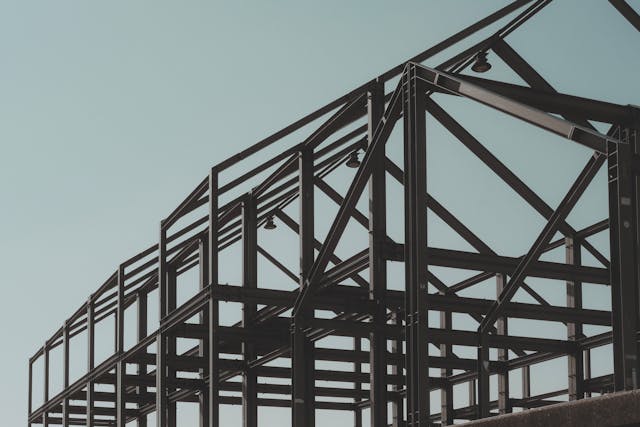
Structural steel remains the primary choice for high-rises, expansive warehouses, and large-span commercial buildings across Michigan. In this region, however, performance isn’t just about scale—it’s about timing, resilience, and build continuity.
Why it works for Michigan
Mastering Snow Loads
Michigan’s heavy, wet lake-effect snow demands a high strength-to-weight ratio. Steel enables large, column-free spans while minimizing the risk of roof deflection during extreme winter conditions.
The Winter Construction Advantage
Because steel components are prefabricated off-site, experienced commercial contractors in Michigan can continue erection even in sub-freezing conditions—keeping projects on schedule through peak winter months.
Sustainability Alignment
Steel is fully recyclable, making it a strong fit for LEED-certified developments and sustainability-driven projects across markets like Detroit and Ann Arbor.
Michigan reality check
Steel requires proper fireproofing and thermal detailing. Without high-performance insulation and thermal breaks, structural members can act as thermal bridges—leading to significant heat loss during Michigan winters.
Best use cases
Steel is ideal when your project requires:
- Large open floor plates (offices, retail, warehouses)
- Future adaptability (tenant reconfiguration, expansions)
- Faster build timelines (prefabrication and modular systems)
Performance advantages
- High strength-to-weight ratio
- Reduced foundation load compared to heavier systems
- Precision fabrication improves construction efficiency
- Fully recyclable and aligned with ESG goals
Reinforced Concrete
The foundation of long-term ROI
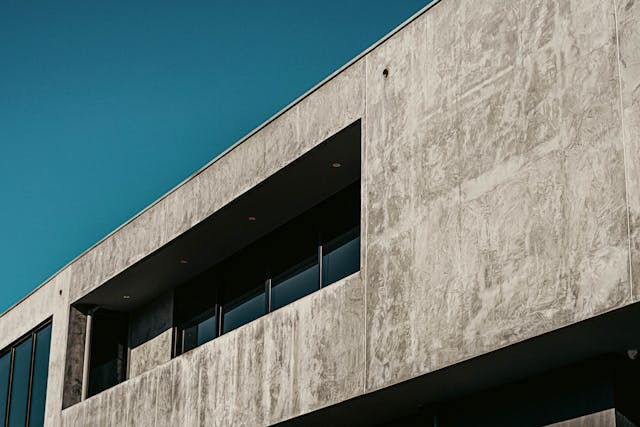
Concrete forms the backbone of commercial construction. When reinforced with steel, it delivers the structural stability required for the region’s soil conditions and heavy-use environments.
Why it works for Michigan
Compressive Strength for Heavy Loads
Ideal for foundations and parking structures exposed to vehicle loads, snow accumulation, and de-icing salts.
Thermal Mass Efficiency
Concrete retains heat, helping stabilize indoor temperatures during rapid seasonal shifts—reducing heating demand over time.
Fire and Acoustic Performance
Provides built-in fire resistance and sound insulation, making it particularly valuable for multi-tenant buildings in high-traffic corridors.
Michigan reality check
Freeze-thaw cycles are a critical risk factor. Air-entrained concrete is essential for Michigan conditions, allowing internal expansion without surface cracking and significantly extending lifespan.
Best use cases
- Foundations and slabs
- Parking structures
- High-rise cores
- Healthcare and institutional buildings
Why developers rely on it
- Exceptional compressive strength
- Fire resistance (critical for code compliance)
- Strong acoustic insulation
- Low maintenance over lifecycle
Mass Timber (CLT & Glulam): The Rise of Sustainable Commercial Builds
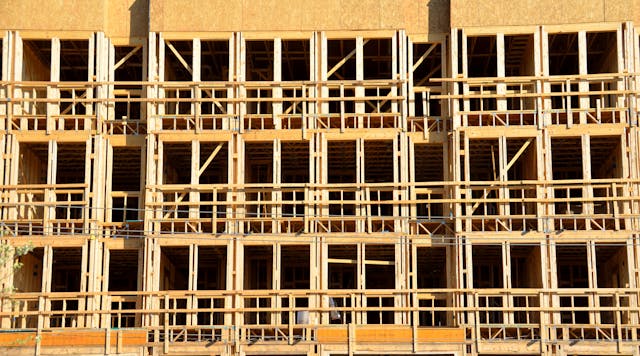
Cross-laminated timber (CLT) is gaining traction as developers look for materials that combine performance with sustainability and tenant appeal.
- Lower embodied carbon than steel and concrete
- Faster installation due to prefabricated panels
- Warm, natural aesthetics that appeal to tenants
- Eligible for green certifications (LEED, WELL)
Why it works
Tenant Appeal and Biophilic Design
Exposed timber interiors create a warmer, more inviting environment—often translating into higher lease value in competitive markets.
Reduced Structural Load
CLT is lighter than concrete, which can reduce foundation requirements in areas with softer soils common across parts of Michigan.
Carbon Advantage
Mass timber sequesters carbon, making it a preferred choice for ESG-driven developments and forward-looking commercial portfolios.
Michigan reality check
Moisture control is critical. In humid summers and during spring thaw cycles, timber must be properly sealed and protected to maintain structural integrity and prevent swelling.
Best use cases
- Mid-rise office buildings
- Boutique retail spaces in Ann Arbor and Royal Oak
- Sustainability-focused headquarters
Planning commercial remodeling in Michigan?
Choosing the right materials is critical—but choosing the right contractor is what ensures they perform as intended.
If you’re planning a commercial build, renovation, or expansion in Michigan, work with a team that understands local conditions, codes, and long-term performance.
- Get expert guidance on material selection
- Avoid costly mistakes before construction begins
- Build for durability, efficiency, and ROI
Brick & Masonry
Proven endurance with minimal lifecycle costs
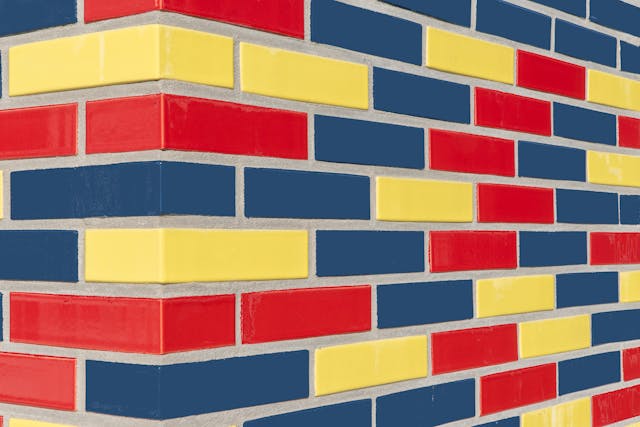
In an era of short-lived facade trends, masonry remains the preferred choice for owners focused on long-term asset performance. For commercial contractors in Michigan, brick and masonry systems offer a balance of durability, efficiency, and minimal maintenance over decades.
Why it works for Michigan
Thermal Mass Advantage
Brick naturally regulates indoor temperatures by absorbing heat during the day and releasing it slowly at night. This helps reduce peak HVAC demand and stabilizes indoor environments during Michigan’s temperature swings.
Weather Resistance
Unlike many synthetic materials, masonry does not rot, dent, or fade. It performs consistently against heavy rain, sleet, and wind-driven moisture common across the Great Lakes region.
Built-In Fire Safety
As a non-combustible material, masonry provides inherent fire resistance—often contributing to lower insurance costs for commercial property owners.
The expert edge
Experienced commercial contractors in Michigan often recommend rainscreen masonry systems. By incorporating a drainage cavity behind the brick veneer, these systems allow moisture to escape before it reaches the structural wall—significantly improving long-term durability.
Best use cases
- Retail storefronts
- Educational campuses
- Low- to mid-rise professional buildings
High-performance glass & curtain walls
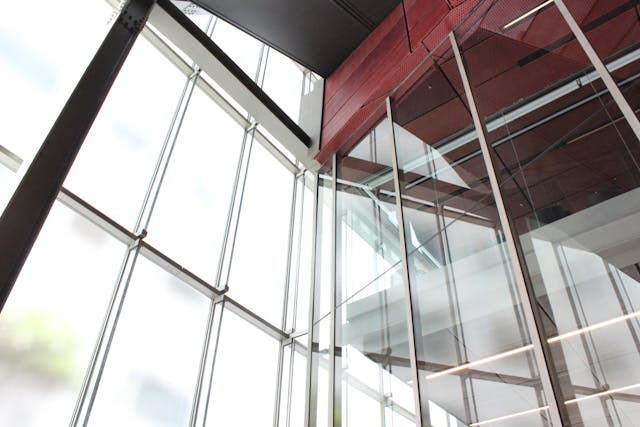
Modern commercial buildings rely heavily on glass—but in Michigan, performance matters as much as aesthetics. With hot summers and freezing winters, glazing systems must deliver both visual impact and thermal efficiency.
Why it works for Michigan
Occupant Experience
Natural light remains one of the most requested features among commercial tenants. It enhances productivity, improves comfort, and supports long-term tenant retention.
Low-E Glass Technology
Low-emissivity coatings reflect heat to its source—retaining indoor warmth during winter while minimizing solar heat gain in summer.
Engineered Structural Performance
Modern curtain wall systems are designed to withstand high wind pressures, maintaining envelope integrity during severe weather conditions.
The expert edge
Focus on thermal breaks—not just the glass itself. Properly designed aluminum framing systems with non-conductive thermal barriers prevent heat loss and condensation, which are common issues during Michigan winters.
Best use cases
- Corporate headquarters
- Flagship retail locations
- Mixed-use developments
The Horizon: emerging smart materials
Material innovation in commercial construction is shifting from strength alone to adaptability, durability, and sustainability.
Key innovations
Self-Healing Concrete
Advanced concrete mixes embedded with calcite-producing bacteria can seal micro-cracks when exposed to moisture, helping prevent long-term structural deterioration.
Carbon-Injected Concrete
New concrete technologies incorporate captured CO2 during production, reducing environmental impact while improving compressive strength.
Engineered Bamboo
Used in select structural and interior applications, engineered bamboo offers high tensile strength combined with rapid renewability.
Michigan reality check
While emerging materials show strong potential, performance in Michigan’s freeze-thaw cycles and moisture-heavy conditions must be carefully evaluated before large-scale adoption.
Final Takeaway: the integrated approach
There is no single “best” material—only the right combination aligned with your project’s performance goals.
The most successful commercial buildings in Michigan are designed as integrated systems, where structure and envelope work together:
- Structure: Steel and concrete provide strength and stability
- Envelope: Glass and masonry control energy, moisture, and durability
Experienced commercial office remodeling contractors in Michigan approach material selection holistically—ensuring that every component contributes to long-term performance, efficiency, and return on investment.
Related blogs
Sustainable Commercial Remodeling: Green Materials Michigan Companies Love
How Modern Commercial Design Helps Michigan Businesses Improve Employee Retention
What to Look for When Hiring a Commercial Remodeling Contractor in Michigan
Top Commercial Remodeling Trends Michigan Businesses Are Embracing in 2026
Michigan Commercial Renovation Costs: What Business Owners Should Expect in 2026
How to Minimize Downtime During Your Commercial Remodel in Michigan


Leave a Reply