
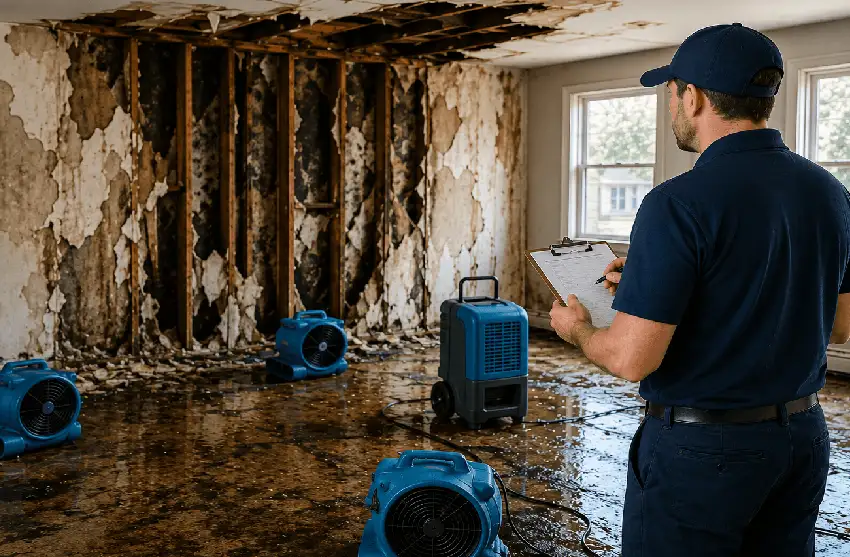
What Insurance Adjusters Look for After Property Damage
A Homeowner’s Guide to Insurance Restoration, Documentation, and Property Damage Assessment in Michigan
Property damage creates two separate challenges at the same time.
The first is the visible damage itself — water inside a basement, smoke contamination after a fire, storm-related structural issues, or moisture spreading behind walls and flooring.
The second is the insurance restoration process that begins almost immediately afterward.
Many homeowners focus understandably on cleanup and repairs first. However, insurance claims are heavily influenced by how the damage is documented, evaluated, and managed during the earliest stages of restoration.
Insurance adjusters do not evaluate property damage based only on appearance. They assess:
- the source of the damage
- the extent of affected materials
- mitigation efforts
- moisture conditions
- structural impact
- restoration scope documentation
- whether the loss aligns with policy coverage
Understanding what insurance adjusters look for after water damage, fire damage, storm damage, or mold-related conditions helps homeowners make more informed decisions during the restoration process.
This is especially important in Michigan, where older homes, freeze-thaw conditions, basement moisture, winter pipe bursts, and seasonal weather events often create complex restoration claims.
Insurance Adjusters Assess Cause Before Repair Scope
One of the most important parts of any property damage claim is identifying the source and cause of the loss.
Insurance adjusters evaluate whether damage resulted from:
- sudden events
- accidental failures
- weather-related conditions
- gradual deterioration
- long-term neglect
- pre-existing issues
This distinction matters because insurance coverage often depends on how the damage occurred.
For example:
- burst pipes during freezing temperatures may qualify differently from long-term plumbing leaks
- sudden storm-related water intrusion may be handled differently from ongoing groundwater seepage
- fire damage from an electrical event may involve different restoration considerations than smoke exposure from prolonged conditions
This is why professional restoration documentation begins with identifying both the origin and progression of damage rather than focusing only on visible cleanup.
Homeowners working with insurance restoration contractors in Michigan often benefit from detailed moisture mapping, structural assessment, and photographic documentation early in the process.
Water Damage Claims Involve More Than Visible Water
One of the most misunderstood aspects of water damage restoration is how far moisture can travel beyond visible surfaces. Water rarely remains confined to the area where the problem first appears. In many Michigan homes, especially older properties, moisture can spread through wall cavities, subflooring, insulation systems, framing assemblies, basement foundations, and adjoining rooms before visible signs become obvious.
Because of this, insurance adjusters and restoration professionals evaluate far more than standing water or surface staining. They assess hidden moisture conditions, material absorption levels, humidity exposure, and how deeply water may have migrated into the structure itself.
This is why professional water damage restoration services often involve:
- moisture meter readings
- infrared thermal imaging
- subfloor and drywall moisture assessment
- controlled structural drying documentation
- environmental and humidity monitoring
Without this level of documentation, portions of an insurance claim may lack sufficient evidence explaining why certain materials require drying, removal, restoration, or replacement.
Documentation Is One of the Most Important Factors in Insurance Restoration
Insurance adjusters rely heavily on documentation throughout the insurance restoration claim process. In many cases, documentation becomes the foundation for how damage is interpreted, how repair scopes are approved, and how efficient communication moves between homeowners, contractors, and insurance providers.
Well-organized documentation helps establish:
- the condition of the property immediately after loss
- the progression and spread of damage
- mitigation timelines and emergency response actions
- which materials were affected
- why certain restoration methods were necessary
- how reconstruction scopes were determined
Professional restoration documentation is typically far more detailed than homeowners expect. It often includes:
- photographs captured before mitigation begins
- moisture meter and humidity readings
- room-by-room damage assessments
- equipment placement and monitoring logs
- controlled drying progress reports
- structural and environmental observations
- itemized repair and reconstruction scopes
In larger water damage restoration or fire damage restoration projects, documentation also helps create a clear timeline showing how the property’s condition changed throughout the restoration process. This becomes especially important when hidden moisture, smoke contamination, or structural exposure is discovered after initial mitigation begins.
The quality and organization of restoration documentation often influence how efficiently an insurance claim progresses. Clear documentation helps support faster claim approvals, improves communication between insurance adjusters and restoration contractors, and provides clarification when supplemental approvals or additional repair scopes become necessary.
It also reduces confusion surrounding material replacement decisions, restoration methods, and reconstruction planning. Because of this, experienced restoration contractors typically prioritize assessment, documentation, and moisture mapping before beginning large-scale demolition or reconstruction work.
A properly documented restoration project not only strengthens the insurance claim itself but also creates a more accurate and organized roadmap for repairs moving forward.
Insurance Adjusters Evaluate Mitigation Efforts Carefully
Most insurance policies require homeowners to take reasonable steps to prevent additional damage after a loss occurs. This process is known as mitigation, and it plays a major role in how insurance restoration claims are evaluated.
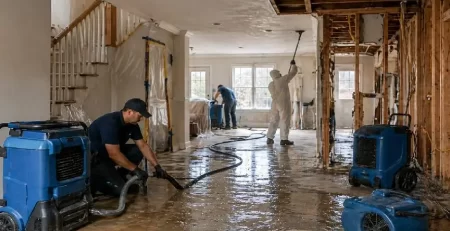
Mitigation focuses on stabilizing the property and reducing the spread of damage before full reconstruction begins. Depending on the situation, mitigation efforts may include:
- emergency water extraction
- temporary board-up services
- roof tarping
- controlled structural drying
- stabilizing damaged materials
- removing standing water
- protecting unaffected areas from contamination
Insurance adjusters often review how quickly mitigation efforts began, whether moisture conditions were managed properly, and whether additional damage developed due to delays or incomplete drying. They also evaluate whether emergency response actions aligned with accepted restoration standards and whether the mitigation process was documented correctly throughout the project.
This becomes especially important after basement flooding or water intrusion events, where moisture can continue spreading beneath flooring systems, inside wall cavities, and through insulation materials long after visible water is removed. Delayed drying can increase flooring deterioration, drywall damage, microbial growth risks, and long-term structural moisture exposure if conditions are not stabilized early.
These concerns are particularly relevant in Michigan homes, where basements and lower-level spaces are more vulnerable to moisture accumulation following storms, pipe failures, or seasonal groundwater conditions.
Homeowners dealing with flooding situations can better understand these risks by reviewing how basement flooding affects Michigan homes and why rapid mitigation plays such an important role in both restoration and insurance evaluation.
Fire Damage Restoration Involves More Than Burned Materials
After a fire, insurance adjusters assess far more than visible burn damage. In many cases, the larger restoration challenge involves how smoke, soot, heat, and airborne contaminants spread throughout the property after the fire itself is extinguished.
Smoke damage and soot contamination can travel through multiple areas of a home or commercial property, including:
- HVAC systems
- insulation materials
- porous surfaces and furnishings
- ceiling cavities
- ventilation pathways
- adjacent rooms not directly exposed to flames
Because of this, insurance adjusters and fire damage restoration professionals evaluate much more than the visibly affected areas. They assess smoke migration patterns, soot residue conditions, odor penetration, electrical system exposure, structural stability, and contamination inside hidden assemblies where smoke particles may continue affecting materials over time.
This is why professional fire damage restoration services often involve:
- air quality assessment
- soot and residue testing
- specialized cleaning and containment methods
- deodorization procedures
- documentation of affected contents and structural materials
Proper assessment and documentation help determine which materials can be restored, which require replacement, and how far smoke contamination has spread beyond the original fire area. Incomplete cleanup can allow soot residue, smoke odor, and corrosive contaminants to continue affecting the property long after the visible fire damage has been addressed.
Older Homes Require More Detailed Insurance Evaluation
Older Michigan homes often involve more complex restoration assessments because building systems vary significantly across different construction eras.
Insurance adjusters may evaluate:
- previous remodeling work
- older plumbing systems
- outdated electrical wiring
- historic plaster construction
- aging insulation materials
- long-term structural settlement patterns
For example, water damage inside plaster walls behaves differently than moisture exposure inside modern drywall assemblies.
This is one reason why older Michigan homes often require specialized restoration and remodeling approaches after property damage occurs.
Restoration Scope Definition Affects the Entire Claim Process
One of the most important parts of insurance restoration is defining the repair scope accurately.
Adjusters evaluate:
- what materials are salvageable
- what requires replacement
- how far moisture or smoke contamination spread
- whether demolition boundaries are justified
- how repairs connect to surrounding finishes and systems
A professional restoration scope explains:
- why materials were affected
- how conditions were documented
- what restoration methods were used
- how reconstruction will return the property to pre-loss condition
Communication Often Determines How Smoothly Restoration Claims Progress
Insurance restoration projects typically involve multiple parties working at the same time, including homeowners, insurance adjusters, restoration contractors, reconstruction teams, inspectors, and in some cases, engineers or environmental specialists. Because several decisions are being made simultaneously, communication often becomes one of the most important factors influencing how efficiently the restoration process moves forward.
Projects generally progress more smoothly when documentation remains organized, timelines are clearly established, mitigation records are updated consistently, and restoration scopes are detailed enough to support ongoing insurance evaluation. Clear communication between contractors and insurance providers also helps reduce delays involving supplemental approvals, reconstruction planning, material replacement decisions, and scheduling coordination.
In larger water damage restoration or fire damage restoration projects, restoration conditions can evolve as hidden moisture, smoke contamination, or structural exposure is uncovered during mitigation. When communication remains consistent throughout the project, these discoveries can be documented and addressed more efficiently without disrupting the overall restoration timeline.
For homeowners, this level of coordination creates a more transparent process from initial damage assessment through final reconstruction, helping ensure that both the insurance claim and the repair work remain aligned as conditions change.
What Homeowners Should Do Immediately After Property Damage
After water damage, fire damage, or storm-related loss, homeowners should prioritize:
- documenting conditions immediately
- preventing additional damage
- contacting qualified restoration professionals
- preserving damaged materials until assessment occurs
- understanding the full scope before beginning reconstruction
The restoration process is not only about repairs.
It is also about creating a documented path from initial damage assessment through final reconstruction.
Conclusion
Insurance adjusters evaluate far more than visible property damage.
They assess:
- cause of loss
- mitigation efforts
- moisture conditions
- contamination spread
- documentation quality
- structural impact
- restoration scope accuracy
These evaluations directly influence how insurance restoration claims progress and how repair work is approved.
For homeowners, understanding this process creates better decision-making during situations that are already stressful and time-sensitive.
Because successful restoration is not simply about repairing damaged materials.
It is about managing the entire process clearly, professionally, and strategically from the very beginning.

Leave a Reply