
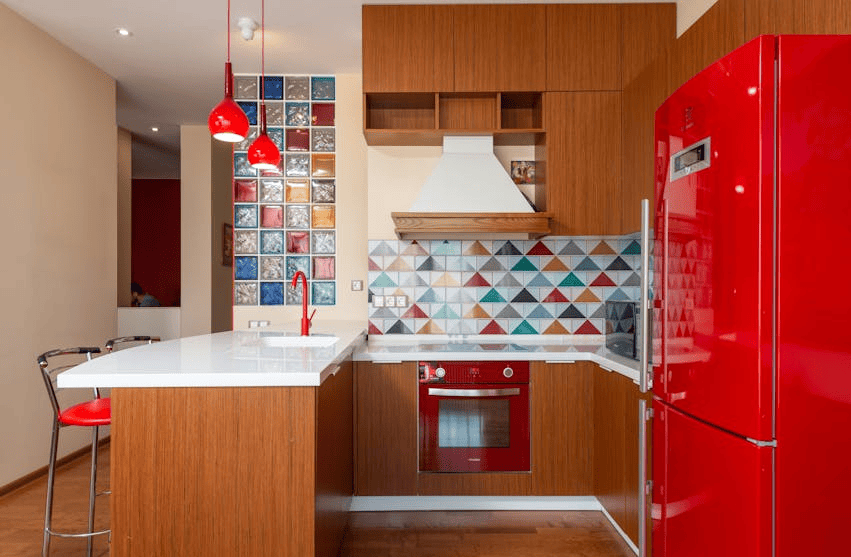
Small Kitchen Remodeling Ideas for Michigan Homes
Smart Designs for Cold Climates
Remodeling a small kitchen in Michigan isn’t just about saving space—it’s about making that space work year-round.
Between long winters, limited natural light, and seasonal humidity changes, your kitchen needs to be designed for both efficiency and durability.
Experienced kitchen remodeling contractors in Michigan approach small kitchens differently—prioritizing light, storage, and materials that hold up in changing conditions.
The “Light-Capture” Layout
In Michigan, small kitchen design isn’t just about space—it’s about how effectively you manage light. During long winter months, limited natural daylight can make an already compact kitchen feel even more confined.
Strategy
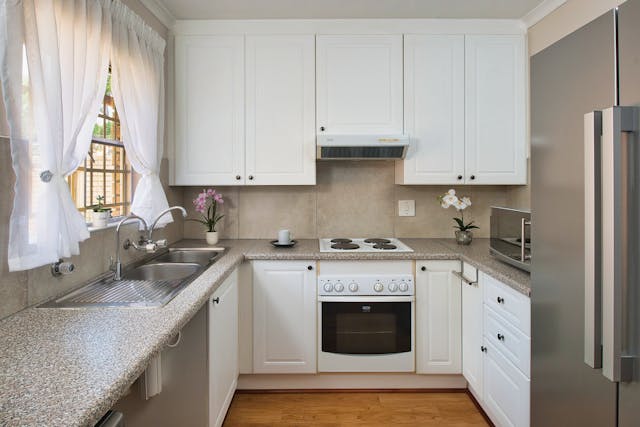
Prioritize a Galley or L-shaped layout, but design around your strongest natural light source—not just appliance placement.
In many Michigan homes, kitchens are positioned away from primary windows. Repositioning key work zones—such as the sink or prep area—closer to available light can significantly improve how the space feels without changing its size.
The adjustment most MI homes need
Upper cabinets are one of the biggest barriers to light in small kitchens. Instead of removing them entirely, reduce them selectively:
- Keep upper cabinets on one wall
- Use open shelving or leave the opposite wall unobstructed
This creates a more open visual flow and allows light to travel deeper into the kitchen.
Designing for balanced lighting
Adding brighter ceiling lights alone often makes a space feel harsher rather than larger. A better approach is layered lighting:
- Warm 2700K under-cabinet lighting for task areas
- Soft ambient ceiling lighting for overall balance
- Accent lighting to reduce contrast between zones
The goal is not maximum brightness, but consistent and comfortable light distribution.
Why layout matters more in kitchen designs
Unlike warmer regions where kitchens extend into outdoor spaces, Michigan kitchens function as enclosed environments for much of the year. This makes layout decisions more impactful—poor flow and dark zones become more noticeable over time.
A well-planned layout improves not just efficiency, but how the space feels during daily use.
In a small kitchen, the most effective upgrade is often better light distribution—not more square footage. Designing your layout to capture and spread light can make the entire space feel more open without structural changes.
Materials That Hold Up Over Time
Material selection in a small kitchen isn’t just about aesthetics; it directly impacts how the space performs over time. Seasonal shifts between dry indoor air in winter and higher humidity in summer put constant stress on surfaces, finishes, and cabinetry.
Choosing the right materials early helps avoid common issues like warping, cracking, and moisture damage—especially in compact kitchens where every surface sees daily use.
Countertops that stay stable year-round
In small kitchens, countertops experience higher wear simply because there’s less surface area to distribute use.
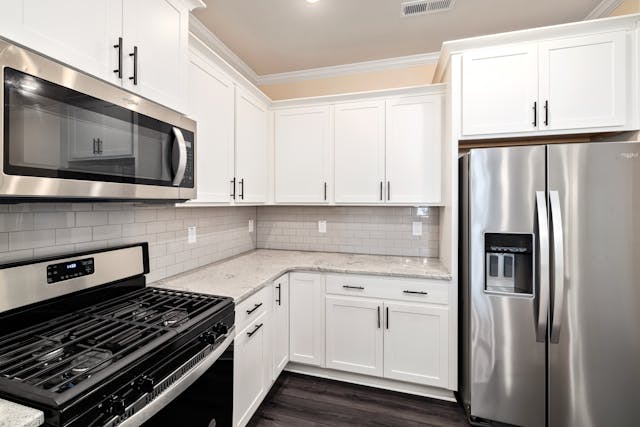
Engineered quartz and quartzite are the most reliable options. They are non-porous, resistant to moisture, and maintain their structure despite seasonal expansion and contraction.
Natural marble, while visually appealing, tends to require more maintenance and is less forgiving in high-use spaces.
Cabinetry that balances durability and warmth
Cabinet finishes play a major role in how a small kitchen feels—especially during darker months.
Shaker-style or flat-panel cabinets in medium wood tones such as maple or walnut create a balanced look that feels warm without making the space heavy.
These finishes also age better over time compared to high-gloss or purely white laminates, which tend to show wear more quickly.
Flooring that handles daily wear
Kitchen flooring needs to handle moisture, temperature changes, and everyday use—from spills to tracked-in debris.
Luxury Vinyl Plank (LVP) is often the most practical choice for small kitchens. It offers water resistance, durability, and a softer feel underfoot compared to tile or hardwood.
While hardwood remains a popular option, it is more susceptible to moisture-related movement and long-term wear in high-traffic kitchen areas.
The material mistake to avoid
A common mistake in small kitchen remodels is choosing materials based purely on appearance rather than performance.
Materials that look good initially but cannot handle seasonal changes often lead to higher maintenance costs and early replacement.
This is where working with an experienced kitchen remodeling contractor makes a measurable difference—material selection often determines long-term performance.
In a small kitchen, materials need to do more than look good—they need to perform consistently. Choosing durable, low-maintenance surfaces ensures your kitchen stays functional and visually appealing for years to come.
High-Efficiency Storage (Where Most Small Kitchens Fall Short)
In a small kitchen, storage isn’t just about capacity—it’s about accessibility. Many kitchens technically have enough storage, but poor layout and dead space make it difficult to use efficiently.
The result is cluttered countertops, overcrowded cabinets, and wasted square footage.
The problem: hidden inefficiencies
Most standard kitchen designs leave valuable space unused:
- Deep cabinets where items get lost in the back
- Narrow gaps between appliances that go unused
- Toe-kick areas that serve no functional purpose
These inefficiencies become more noticeable in smaller kitchens where every inch matters.
Storage solutions that actually make a difference
Toe-Kick Drawers
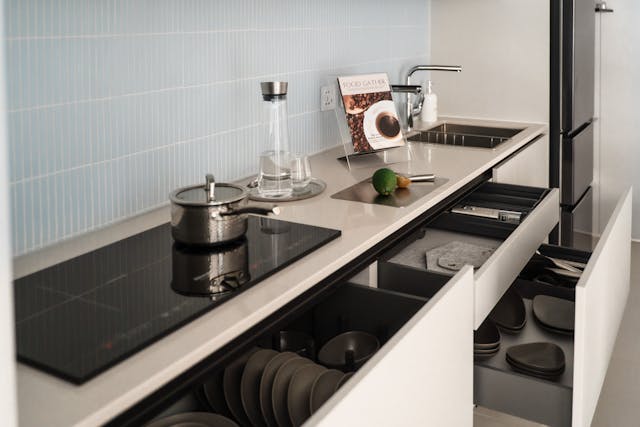
The space beneath base cabinets can be converted into shallow drawers—ideal for storing baking sheets, trays, or rarely used items.
Vertical Pull-Outs
Slim pull-out units (often just a few inches wide) can transform narrow gaps into highly functional storage for spices, oils, or utensils.
Appliance Garages
A dedicated cabinet with a retractable door keeps everyday appliances like toasters and coffee makers accessible but out of sight—freeing up valuable counter space.
The layout shift that changes everything
Instead of thinking in terms of “more cabinets,” think in terms of better access.
Pull-out drawers, corner solutions like lazy Susans or “magic corner” systems, and full-extension shelving dramatically improve usability without increasing footprint.
Why this matters more than people expect
In a small kitchen, clutter builds faster. When storage isn’t intuitive, even well-designed spaces begin to feel cramped.
Efficient storage doesn’t just improve organization—it directly impacts how comfortable and functional the kitchen feels during daily use.
The most effective storage upgrades aren’t about adding more—they’re about making every inch usable. Smart storage design turns a small kitchen into a highly efficient workspace without expanding its size.
Smart Appliances That Save Space (Not Just Add Features)
In a small kitchen, appliances should do more than function—they should contribute to space efficiency. The right selections can free up counter space, improve workflow, and make the kitchen feel less crowded.
Choose appliances that work double duty
Induction Cooktops
Unlike traditional gas or electric ranges, induction cooktops have a flat surface that can double as usable counter space when not in use. This makes them especially valuable in compact kitchens where prep space is limited.
Microwave Drawers
Instead of occupying upper cabinet space, built-in microwave drawers keep surfaces clear and improve accessibility.
Keep the visual line clean
One of the simplest ways to make a small kitchen feel larger is to reduce visual interruptions.
Panel-ready appliances—such as refrigerators and dishwashers—blend into cabinetry, creating a seamless look that makes the space appear more open.
The layout advantage
Appliance placement matters as much as appliance choice.
Positioning appliances to support a natural workflow—prep, cook, clean—reduces unnecessary movement and improves how efficiently the kitchen functions.
The mistake to avoid
Adding too many features or oversized appliances can overwhelm a small kitchen. Prioritize function and proportion over upgrades that don’t improve everyday use.
In a compact kitchen, the best appliances are the ones that simplify the space. Choosing streamlined, multi-functional options helps maintain both usability and visual clarity.
Work Zones & Flow (What Makes a Small Kitchen Feel Easy to Use)
In a small kitchen, efficiency isn’t just about storage or layout—it’s about how easily you can move through everyday tasks. Even minor inefficiencies become noticeable when space is limited.
A kitchen that looks well-designed can still feel frustrating if the workflow isn’t optimized.
The core principle: reduce unnecessary movement
Every kitchen follows three primary actions: prep, cook, and clean. The goal is to keep these zones connected without overlap.
When these areas are too far apart—or interfere with each other—simple tasks start to take more time and effort than they should.
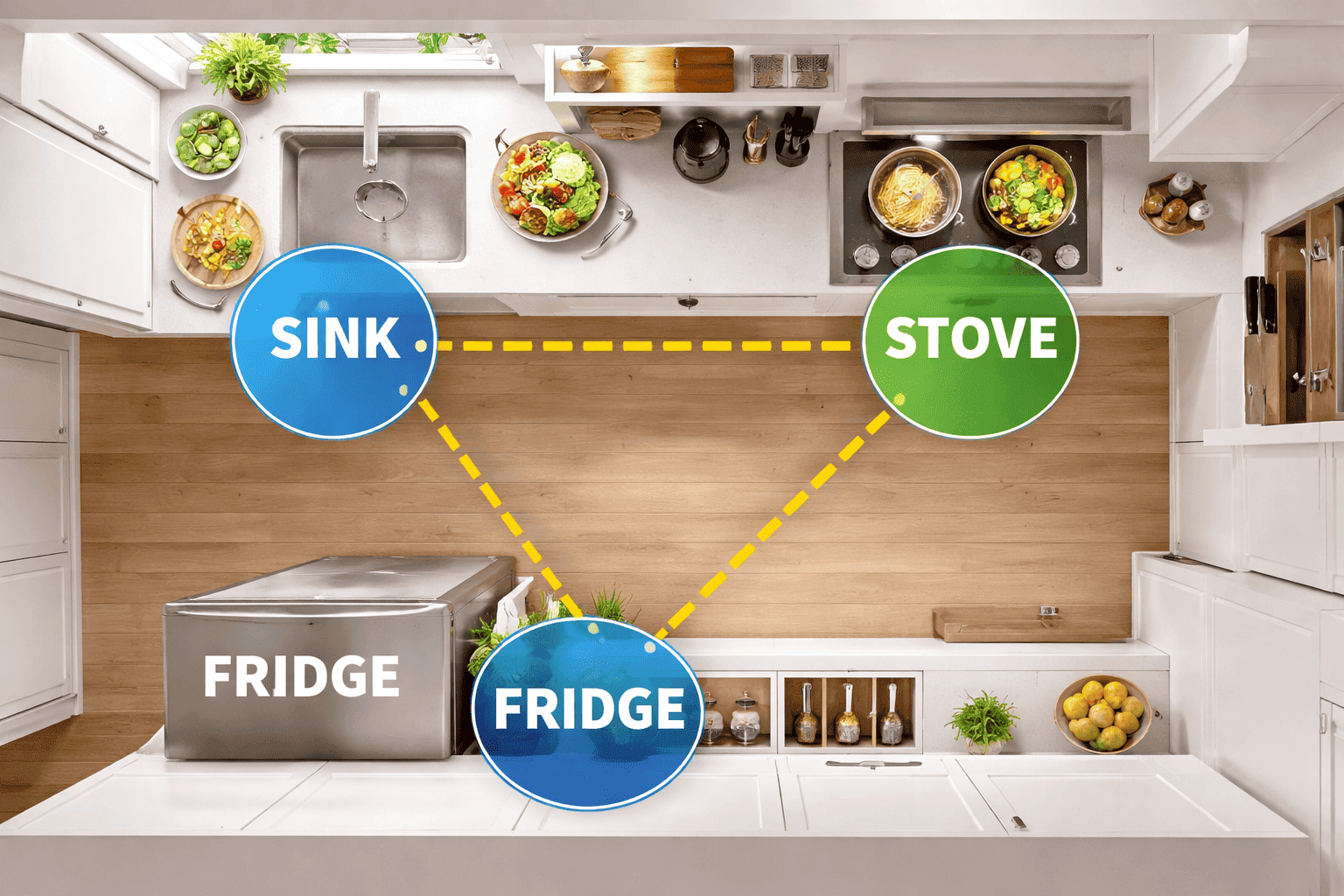
What efficient flow looks like
- The sink, stove, and refrigerator are positioned within easy reach
- Prep space is located between the sink and the cooking area
- Frequently used items are stored close to where they are used
This creates a natural movement pattern that reduces back-and-forth steps.
The common layout mistake
In many small kitchens, appliances and storage are placed wherever they fit—without considering how the space will actually be used.
This often leads to:
- Blocked pathways when multiple people are in the kitchen
- Prep areas that feel cramped or disconnected
- Constant movement across the space for basic tasks
The shift that improves everything
Instead of focusing only on fitting elements into the space, focus on how those elements interact.
Small adjustments—like relocating a prep surface, adjusting cabinet access, or rethinking appliance placement—can significantly improve usability without increasing square footage.
Why flow matters more in small kitchens
In compact spaces, there’s less room to compensate for inefficiencies. Poor flow becomes immediately noticeable because every step happens within a tighter footprint.
When the layout works, the kitchen feels larger and more comfortable to use—even if the actual size doesn’t change.
A well-functioning small kitchen isn’t defined by how much it fits—but by how smoothly it works. Designing for flow ensures the space feels intuitive, efficient, and easier to use every day.
Comparison: Standard vs Michigan-Optimized Small Kitchen Remodel
Here’s how typical remodeling choices compare when optimized for Michigan homes:
| Feature | Standard Remodel | Michigan-Optimized Remodel |
|---|---|---|
| Cabinet Style | Stock white laminate | Warm wood tones (Maple/Walnut) |
| Backsplash | Standard tile with grout | Slab backsplash (less maintenance) |
| Lighting | Single overhead fixture | Layered lighting (ambient + task + accent) |
| Flooring | Hardwood | Moisture-resistant LVP |
| Storage | Basic cabinets | Smart storage solutions |
| Overall Result | Looks good initially | Performs better long-term with lower maintenance |
A small kitchen doesn’t need more space—it needs better planning. The right design decisions improve both functionality and long-term usability.
Planning a Small Kitchen Remodel in Michigan?
A well-designed small kitchen can completely transform how your home functions—but only if it’s built for Michigan conditions.
Work with a team that understands:
- Space optimization for older home layouts
- Material selection for seasonal durability
- Lighting strategies for long winters
The difference between a kitchen that looks good and one that works every day comes down to planning.
Request a consultation today →
Energy-Efficient Kitchen Remodels in Michigan: Save Money Year-Round
Open Kitchen Layouts vs. Closed Kitchens: What Works Best in Michigan Homes?
Kitchen Makeovers in Michigan: What You Need to Know Before Starting
Why You Should Hire a Local Kitchen Remodeler in Michigan?



Comment (1)
[…] Also read: Small kitchen remodeling ideas for MI homes […]