
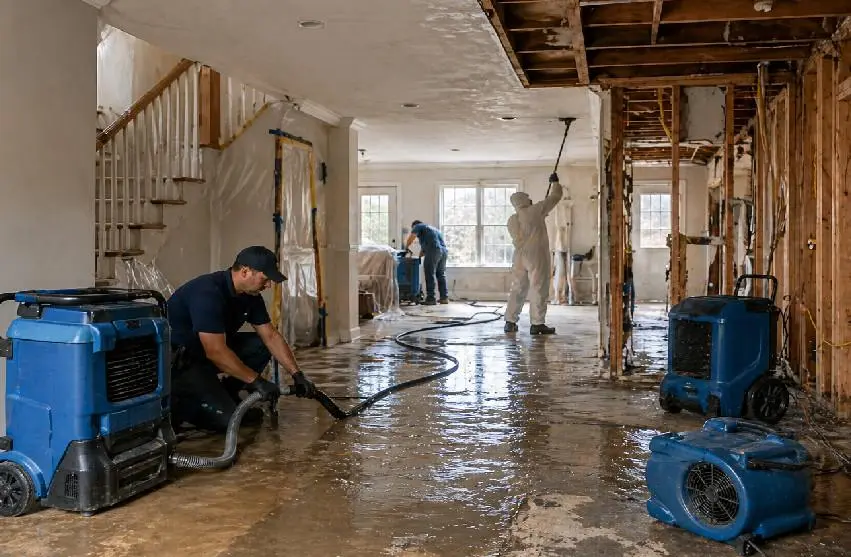
Why Proper Documentation Is Critical for Insurance Claims
The moment property damage happens, whether it’s a storm-battered roof, a burst pipe, or fire damage that tears through a kitchen, the instinct is to start cleaning up and calling contractors. But the single decision that shapes how much of that repair actually gets covered isn’t who you hire first. It’s how well you document the damage before the cleanup begins. Insurance companies evaluate claims on evidence, and the gap between a fully paid claim and a denied or underpaid one usually comes down to what was recorded, when, and how thoroughly.
Why Insurers Scrutinize Every Claim
Insurance companies are, at their core, businesses managing risk, and every claim they pay out affects that balance. That doesn’t make them adversarial by design, but it does mean adjusters are trained to look for gaps: inconsistencies between what’s claimed and what’s documented, damage that could be attributed to a pre-existing condition rather than the covered event, or repair estimates that don’t line up with the visible evidence. A claim built on thin documentation gives an adjuster room to interpret the loss conservatively. A claim built on thorough, dated, well-organized documentation leaves far less room for dispute.
This is where a lot of homeowners lose value in the process without realizing it. It’s not that insurers are looking to deny legitimate claims outright; it’s that incomplete documentation makes it easy to underpay one. Missing photos of secondary damage, no written record of the timeline, or a repair estimate that doesn’t itemize scope of work all give an adjuster a lower number to work from by default.
What Michigan Law Requires of Your Insurer
Michigan homeowners have more leverage in this process than most realize, but it only helps if you know the timeline you’re entitled to and can point to documentation when a delay drags on. Under Michigan’s Uniform Trade Practices Act, an insurer must acknowledge your claim and act reasonably promptly once you’ve reported a loss. Once notice is given, the insurer has 30 days to specify, in writing, exactly what materials it considers a “satisfactory proof of loss,” and once that proof of loss is submitted, the company generally has 60 days to issue payment on the amounts it doesn’t dispute.
Those deadlines have teeth. Under Michigan’s prompt payment statute, MCL 500.2006, an insurer that fails to pay a valid claim on a timely basis can owe 12% annual interest on the amount owed, and unjustified delay can itself be treated as an unfair trade practice. None of this happens automatically, though, and it doesn’t override an insurer’s right to dispute a claim it genuinely believes is inflated or unsupported.
The practical upshot is that a homeowner who has documented the loss thoroughly, submitted a complete proof of loss promptly, and kept a written log of every communication is in a far stronger position to invoke these protections than one who’s relying on memory and a folder of unsorted photos. Most Michigan homeowner policies also include a “suit against us” clause setting a deadline, often around 12 months from the date of loss, for filing any legal action tied to the claim, so this isn’t a process to let drift indefinitely.
Start Before Damage Ever Happens: The Home Inventory
The strongest documentation is the kind you never have to reconstruct from memory. A home inventory, a simple, updated record of your home’s condition and belongings before anything goes wrong, is one of the most overlooked tools in the entire claims process, largely because nobody thinks to build one until after they need it. Walking through each room with your phone, recording video of built-in features, appliances, furniture, and higher-value belongings while narrating what you’re seeing, takes under an hour and creates a baseline that’s nearly impossible to dispute later.
Store a copy somewhere other than the house itself, such as cloud storage or with a family member, so it survives whatever event damages the property. Revisit it after any major purchase or renovation, since an outdated inventory undercuts a claim almost as much as no inventory at all. When a loss occurs, that pre-loss record instantly resolves any question about what existed and its condition beforehand, which is often the exact question an adjuster is most focused on.
What Thorough Documentation Actually Looks Like
Good documentation isn’t just a handful of photos snapped on a phone before debris gets hauled away. It’s a structured record that tells the full story of the damage, the cause, and the cost to repair it correctly.
Photograph and video everything, immediately.
Wide-angle shots that establish the scope of damage, close-ups of specific problem areas, and a slow, narrated walkthrough video that captures the property as a whole all serve different purposes in a claim file. Include reference points, like a house number, a room doorway, or a landmark, so each image is clearly tied to a specific location rather than floating context-free in a folder.
Pause on each area of damage for several seconds rather than panning quickly, since fast movement produces blurry footage that’s far less useful later. Damage that seems minor at first, like a small water stain or a few missing shingles, is often connected to larger structural issues that surface later, so document generously rather than selectively, and never delete a photo or clip even if it seems like a mistake in the moment.
Date-stamp and organize as you go.
Photos and videos taken immediately after an event carry more weight than ones taken days later, since they establish a clear timeline connecting the damage to the covered incident. Keep files organized by date and by area of the home rather than letting them pile up unsorted, and back them up somewhere other than a single phone that could itself be damaged or lost.
Keep a written claim journal.
Note when the damage occurred, when it was discovered, when the insurer was notified, and every subsequent communication with the adjuster, including names, dates, and a short summary of what was discussed.
This matters more than most homeowners expect: after a widespread event like a storm, contractors and inspectors are often booked out for weeks, and a documented record of your attempts to schedule an assessment protects you if the insurer later questions why repairs took time to begin.
Get a detailed, itemized repair estimate.
A vague estimate inviting an adjuster to fill in the blanks works against you. A scope of work that itemizes materials, labor, and the specific repairs required, tied directly to the documented damage, gives the adjuster a concrete number to evaluate rather than negotiate down.
Don’t overlook secondary and hidden damage.
Water intrusion, smoke damage, and structural stress often extend well beyond the most visible point of failure. A collapsed section of roof might also mean saturated insulation, compromised framing, or electrical exposure that isn’t obvious during a quick walkthrough but matters enormously to the total cost of repair.
Retain all receipts and records.
Emergency repairs, temporary housing, replaced belongings, and any mitigation work performed to prevent further damage should all be documented with receipts, since most policies reimburse reasonable costs incurred to protect the property after a loss. Most policies also impose a duty to mitigate further damage, covering a hole in a roof or shutting off water to a burst pipe, so keep records showing that step was taken promptly as well.
Where a Contractor’s Assessment Strengthens a Claim
Homeowner documentation establishes the record, but a professional damage assessment from a licensed contractor adds a layer of credibility that homeowner photos alone can’t. A contractor evaluating the property brings a trained eye for damage that isn’t visually obvious, structural movement, moisture behind finished surfaces, code issues triggered by the repair itself, and can translate that assessment into a detailed, itemized estimate written in the language an adjuster expects to see.
When that estimate is thorough and grounded in a clear inspection, it becomes difficult for an adjuster to argue the scope of covered repairs down to a lower number.
Being present for the adjuster’s inspection matters here too. Walking the property alongside the adjuster and pointing out documented damage directly, rather than letting them form conclusions from a solo walkthrough, keeps the full scope of the loss in the conversation rather than leaving it to be reconstructed from photos after the fact.
Common Documentation Mistakes That Cost Homeowners
A few patterns show up again and again in claims that come back underpaid or contested. Waiting too long to document damage lets conditions change, weather erases evidence, and memories of the original scope fade. Focusing only on the obvious damage, like the collapsed section of ceiling, while skipping the water-stained drywall two rooms over, leaves real cost off the table. Throwing away damaged materials before they’re documented removes evidence an adjuster may want to see directly. And accepting a verbal estimate without a written, itemized breakdown leaves the homeowner with nothing concrete to point to if the payout comes back lower than expected.
If a Claim Is Delayed or the Settlement Feels Too Low
Even a thoroughly documented claim can come back with a settlement offer that doesn’t match the actual cost of repair, or simply drag on far longer than it should. If that happens, the documentation you’ve already built becomes the foundation for a response rather than something you’re scrambling to assemble under pressure.
Start by requesting a written explanation from the insurer for any denied or reduced items, tied to the specific policy language they’re relying on. Compare that explanation directly against your itemized contractor estimate and photo record, since a reduction that doesn’t line up with the documented scope of damage is exactly the kind of discrepancy worth challenging.
If the delay stretches well beyond the 60-day payment window after a completed proof of loss, it’s reasonable to ask directly whether the insurer intends to comply with Michigan’s prompt payment statute. For claims that stall out or come back significantly underpaid despite solid documentation, a public adjuster or an attorney who handles Michigan property insurance disputes can be worth the conversation, particularly on larger losses where the gap between the offer and the actual repair cost is substantial.
Documentation Protects the Repair, Not Just the Payout
There’s a second reason thorough documentation matters beyond the insurance settlement itself: it protects the quality of the rebuild. A repair scoped from a rushed, incomplete assessment risks missing damage that resurfaces months later, after the insurance claim is closed and the cost falls entirely on the homeowner. A repair scoped from a comprehensive inspection and detailed estimate addresses the full extent of the damage the first time, which is ultimately what determines whether the rebuilt space holds up.
US Tech Inc. has worked alongside homeowners across Rochester Hills and Oakland County on property damage repairs for decades, and the claims that go smoothest are consistently the ones backed by clear, professional documentation from the start. Whether it’s storm damage, water intrusion, or fire restoration, a detailed assessment and itemized estimate from a licensed, insured contractor gives homeowners a stronger position with their insurer and a clearer path to getting the repair done right.
Dealing with property damage and need a professional assessment for your insurance claim? Contact US Tech Inc. for a detailed inspection and repair estimate you can bring directly to your adjuster.

Leave a Reply