
Top Winter-Friendly Flooring Options for a Cozy Home
There’s a particular kind of cold that only a Michigan floor knows. It’s not the bracing cold of a wind off Lake Huron or the sting of a January morning on the way to the car. It’s quieter than that: the cold that creeps up through a slab or a subfloor at three in the morning, through socks, through the small gap between a rug and a wall, until you’re standing in your own kitchen wondering why a house with the furnace running still feels like it’s holding its breath.
Most homeowners fix that feeling with a space heater, a thicker pair of socks, or a complaint to whoever installed the floor in the first place. Few think to ask what the floor itself is doing, physically, to make a room feel cold or warm in the first place.
It turns out the answer has less to do with air temperature than most people assume, and a lot to do with a property called thermal conductivity, which is really just a measure of how eagerly a material pulls heat away from whatever touches it. Stone and ceramic tile are eager. Wool carpet is reluctant. That single difference, multiplied across every square foot of flooring in a house, is most of what separates a floor that feels like a Michigan winter from one that feels like a held breath of its own, the good kind.
Why Your Feet Lie to You About Room Temperature
Here’s the part that surprises most people: a tile floor and a carpeted floor in the exact same room, heated to the exact same seventy degrees, do not feel the same under bare feet. The air temperature is identical. What’s different is how fast each surface conducts heat away from your skin.
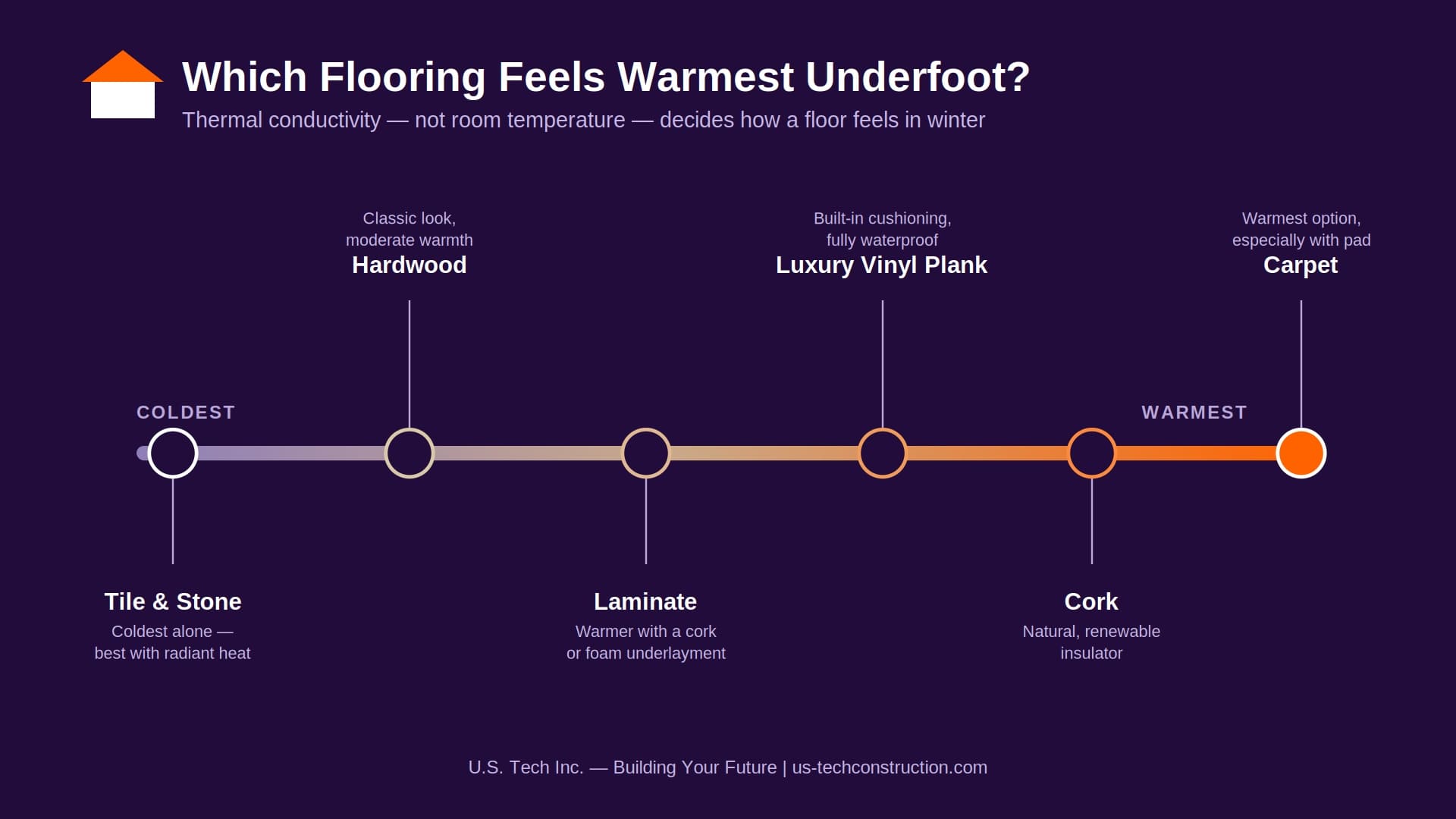
Tile is dense, so it pulls warmth out of your foot quickly, which your nervous system interprets as cold, even though the room itself is perfectly comfortable.
Carpet is mostly trapped air, held in place by millions of fibers, and trapped air is a poor conductor, so it gives up almost none of your body heat back to itself. Your foot stays warm, and your brain concludes the room is cozy, when really it’s the floor doing quiet, invisible work.
This is also why a cork floor can feel noticeably warmer than an oak floor finished the same way, and why the basement slab under a thin rug can still feel glacial in February no matter how high the thermostat is set. Flooring is not merely decoration sitting on top of a house’s heating system. It’s part of the heating system, whether or not anyone designed it that way.
Michigan complicates this further with two things most climates don’t deal with to the same degree. The first is the freeze-thaw cycle: temperatures here don’t just drop and stay down; they swing, sometimes by thirty or forty degrees within a single week, and every swing pulls moisture in and out of a home’s indoor air.
Materials that expand and contract with humidity, like solid hardwood, can develop gaps, cupping, or cracks over a few winters of that kind of movement. The second is the sheer volume of water and salt that comes through the front door between November and March, which makes moisture resistance as important as warmth for anywhere near an entryway.
The Warmest Thing You Can Put Underfoot, and Why
Carpet remains the undisputed champion of underfoot warmth, and the reason is almost entirely about trapped air rather than the fiber itself. A quality pad beneath the carpet does most of the real insulating work, adding what flooring researchers describe as a measurable boost to a floor’s effective R-value, enough that installed carpet with a good pad over an uninsulated concrete slab produces a noticeably warmer, more comfortable surface than the bare slab alone. That’s not a substitute for insulating a home’s walls and ceiling properly, but it’s a real, physical difference, not just a psychological one.
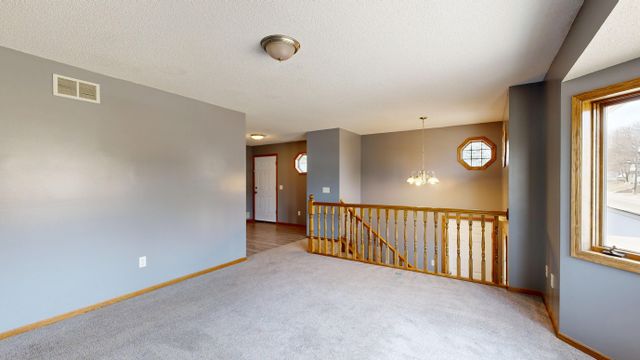
For a Rochester Hills basement rec room sitting on cold concrete, or a bedroom where someone wants to swing their feet out of bed without flinching, carpet still does something no other material quite matches.
Carpet’s one real weakness in a Michigan winter is moisture. The same fibers that trap warm air also trap melted snow, road salt, and the general grime that six months of boots can carry into a house, and once that moisture gets into a carpet backing, it doesn’t leave easily. That’s less an argument against carpet than an argument for choosing where to use it: bedrooms and family rooms, not mudrooms and entryways.
Wood That Doesn’t Fight the Season
Hardwood floors have an old reputation for warmth that isn’t entirely deserved. Wood is a modest insulator, warmer underfoot than stone or tile but nowhere near as forgiving as carpet, and the real story with hardwood in Michigan has less to do with how it feels and more to do with whether it survives the season at all.
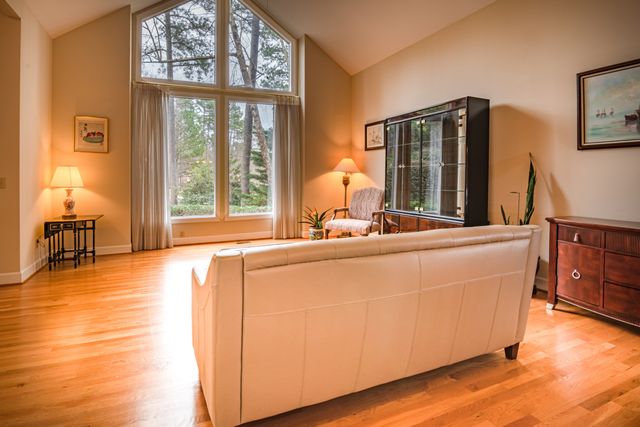
Solid hardwood is milled from a single piece of wood, grain running in one direction, and that structure makes it sensitive to the moisture swings that come with a Michigan winter. As indoor humidity drops in January and climbs again by July, solid planks expand and contract, and over several years of that cycle, gaps and cupping can appear.
Engineered hardwood solves this by layering thin sheets of real wood with the grain running in alternating directions, cross-laminated the way plywood is, which gives it far more dimensional stability. That’s also why engineered hardwood tends to pair better with radiant floor heating than solid wood does, since the heat cycling a radiant system introduces is just another version of the same expansion-and-contraction stress that Michigan’s climate already puts on a floor.
If a drafty old farmhouse or a century home in the historic part of a Michigan town has hardwood installed, there’s a reasonable chance it’s been patched, refinished, and re-leveled more than once over the decades, a small testament to how much that material has had to absorb.
A Material That Didn’t Exist a Generation Ago
Luxury vinyl plank is the newest major player in this story, and it’s worth pausing on how recently that’s true. Twenty years ago, vinyl flooring meant thin sheet goods in a handful of unconvincing wood-grain patterns, the kind of flooring found in rental apartments and basements nobody was proud of.
The technology behind modern LVP, rigid cores, realistic embossed textures, and built-in cushioned backing, is largely a product of the last fifteen years, which is part of why it’s become the default recommendation for so many renovations happening right now.
What makes it genuinely useful in a Michigan winter is that it solves the two biggest problems at once. It’s fully waterproof, so the slush and salt that would damage carpet or warp wood simply sit on the surface until they’re wiped up, which makes it a natural fit for mudrooms, kitchens, and entryways.
And most LVP products now include a layer of padding built directly into each plank, adding a softness and modest insulating value that older vinyl never had. It’s also one of the more forgiving materials to pair with radiant heat: vinyl flooring is listed among the flooring types compatible with radiant floor heating systems, and manufacturers like Nuheat build dedicated heat-limiting settings into their thermostats specifically for luxury vinyl and laminate, to keep the surface in a safe temperature range automatically.
The Floor That Comes From a Tree You Don’t Cut Down
Cork flooring has one of the more unusual origin stories of anything in a home improvement aisle. It’s harvested from the bark of the cork oak, a tree native to the western Mediterranean, and the harvesting itself doesn’t kill or even seriously damage the tree.
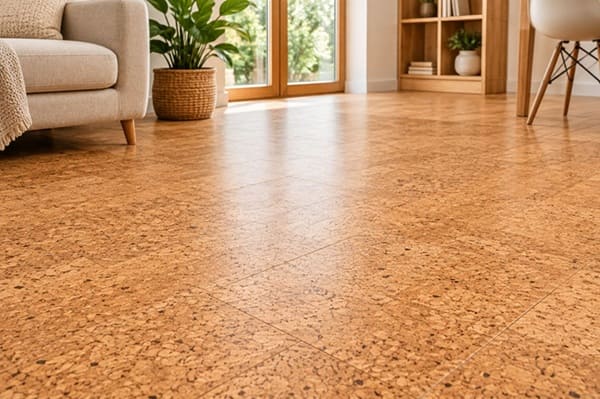
Workers strip the outer bark by hand, in late spring and summer, and the tree simply regrows it over the following nine to twelve years, a cycle that can repeat over a dozen times across a single tree’s two-hundred-year lifespan. It’s one of the few building materials harvested almost the way a sheep is sheared rather than the way a forest is logged, which is part of why cork has become a favorite of homeowners who care about where their materials come from.
That same bark structure, evolved originally to help the tree survive wildfires by insulating its living tissue from heat, is what makes cork flooring behave the way it does indoors. It’s riddled with millions of microscopic air pockets, and that cellular structure gives cork genuine insulating value against cold, closer in feel to carpet than to hardwood, while also making it naturally resistant to mold and insects, a real advantage in a Michigan basement where humidity is harder to control than it is upstairs.
Cork’s weaknesses are honest ones: it fades in direct sun, and it’s softer than hardwood or vinyl, which makes it a better fit for a bedroom or a quiet home office than a hallway that sees daily boot traffic.
The Floor the Romans Already Figured Out
If any flooring choice deserves a history lesson, it’s heated tile, because the idea is considerably older than the house it’s likely going into. Long before anyone called it radiant heat, Roman bathhouses were built over a hypocaust, a hollow space beneath the floor where hot air from a furnace circulated before escaping through flues in the walls, warming both the floor and the room above it.
On the other side of the world, Korean homes were developing a parallel system called ondol, channeling smoke from a cooking fire beneath a stone floor; some archaeological evidence suggests versions of it predate the Roman system by centuries, and a form of it is still in use in Korean homes today, just with hot water replacing smoke.
Tile itself is the coldest material on this list to stand on barefoot, and that’s precisely what makes it the ideal partner for a modern version of that ancient idea. The same density that pulls heat away from a bare foot in an unheated bathroom is what makes tile an excellent conductor once a radiant system is installed beneath it.
Stone and tile are considered the ideal flooring for radiant heat specifically because they conduct warmth efficiently and resist the warping or cracking that temperature changes can cause in other materials. For a Michigan bathroom remodel, that combination solves the single most common complaint about tile floors: the jolt of stepping onto one straight out of the shower in February.
It’s a bigger investment than flooring alone, usually requiring subfloor work and an electrician or plumber to install the heating element, but it turns the coldest material in this entire conversation into one of the most comfortable.
A Practical Stand-In
Laminate flooring rarely gets talked about with the same enthusiasm as hardwood or LVP, but it earns a place in this conversation for a simple reason: a cork or foam underlayment beneath a laminate floor adds real insulating value at a lower price point than almost anything else on this list.
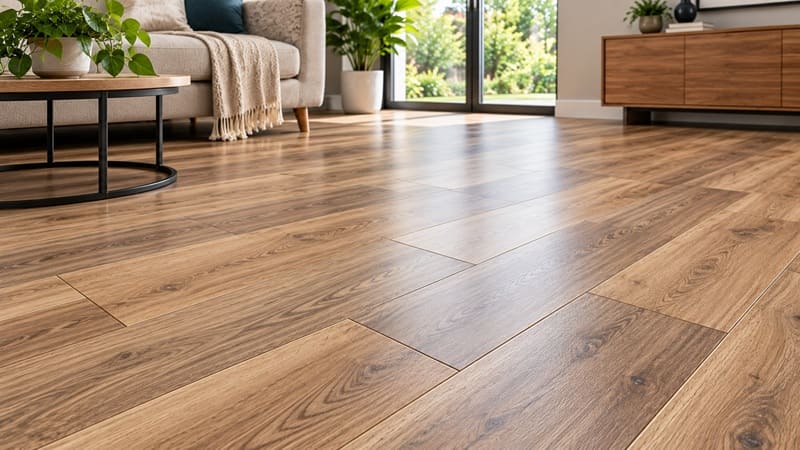
A good cork underlay specifically can boost laminate’s insulating properties, which makes it a sensible choice for a homeowner who wants the warmth and appearance of wood without committing to hardwood’s price tag. Most laminate products are also compatible with radiant heating, though as with LVP, the heat rating varies by manufacturer, so it’s worth confirming before the floor goes down rather than after.
Thinking Room by Room Instead of Material by Material
None of this works as a single answer for an entire house, and it probably shouldn’t. The floor that makes sense in a primary bedroom, where bare feet hit the ground every morning, has different priorities than the floor in a mudroom absorbing six months of Michigan slush. A bedroom or a reading nook rewards carpet or cork, where comfort matters more than moisture resistance.

A kitchen or entryway rewards LVP or tile, where durability against water and salt outweighs softness underfoot. A basement, which sits on a slab that stays cold nearly year-round in this climate, benefits more from insulating value than almost any other room in the house, which argues for carpet with a quality pad or a moisture-resistant LVP over a direct install of hardwood.
And a bathroom, where someone is barefoot and often slightly damp, is where the case for radiant-heated tile is strongest.
Underlayment deserves more credit than it usually gets in these decisions. Whatever sits beneath the visible surface, whether that’s carpet pad, cork sheeting, or foam beneath a laminate plank, adds real insulating value independent of the material on top, and upgrading it is often the least expensive way to make an existing floor feel warmer without replacing it.
For homeowners planning a larger renovation, radiant heat is the upgrade that actually changes which flooring makes sense in the first place. Engineered hardwood and tile both perform well over a radiant system; solid hardwood is a harder pairing, for the same expansion and contraction reasons that make it a riskier choice in Michigan generally.
Where Flooring Fits Into a Larger Remodel
Flooring decisions rarely exist in isolation from everything else happening in a renovation. Subfloor condition, moisture barriers, and whether a room is a candidate for radiant heat all shape which material actually makes sense, which is part of a larger pattern in how certain upgrades add more lasting value to a Michigan home remodel than others. It’s also one of the easier places to make an expensive mistake, which is why it’s worth reviewing some of the more common and costly remodeling mistakes Michigan homeowners run into before finalizing a flooring plan, particularly around subfloor prep that gets skipped to save time.
A good remodeling contractor in Michigan treats flooring as part of a house’s whole thermal picture rather than a cosmetic decision made last. That’s especially true once radiant heat, humidity control, or a finished basement enter the conversation, since each of those changes which material actually performs well over the long run.
A Few Honest Questions
What’s genuinely the warmest flooring for a Michigan winter?
Carpet with a quality pad, by a meaningful margin, with cork a close second. Engineered hardwood and LVP fall in the middle, warmer than tile or stone but not as forgiving as carpet, and both improve noticeably with an area rug in the spots where people actually stand.
Is tile simply a bad idea in a cold climate, then?
Not if it’s paired with radiant heat. On its own, tile is the coldest surface on this list. Underneath it with a heating element installed, it becomes one of the most comfortable floors a house can have, which is exactly why civilizations have been engineering versions of that idea for roughly two thousand years.
Does carpet actually change a room’s temperature, or does it just feel that way?
Both, to a degree. The air temperature in the room doesn’t change, but carpet with pad genuinely slows heat loss through the floor, particularly over a concrete slab, enough to measurably reduce how cold a room feels even if the thermostat reading stays exactly the same.
Can radiant heat be added under an existing floor, or does it require starting over?
It depends heavily on the material and the installation method already in place. Tile, engineered hardwood, and LVP generally accommodate a radiant retrofit more easily than solid hardwood does, but the honest answer is that it needs a specific evaluation from a flooring and heating professional before any plan is set.
Getting It Right for Your Home
The right winter flooring for a Rochester Hills bungalow with a drafty basement looks different than the right answer for a newer build in Troy or Novi, and getting that match right is less about picking the trendiest material and more about understanding how a specific house behaves across a Michigan winter.
As a remodeling company in Rochester Hills, MI, US Tech Inc. has spent over 30 years helping Michigan homeowners make flooring decisions that hold up through actual winters, not just showroom lighting. Call (248) 729-2411 to talk through what will work best for your home.
Sources
- Flooring Clarity: Does Carpet Make a Room Warmer?
- Carpet One: The Best Floors for a Cold Climate
- MP Global Products: Flooring Compatible with Radiant Heating Systems
- MP Global Products: Flooring Compatible with QuietWarmth Radiant Heating Systems by Type
- Warmboard: Flooring Options for Radiant Heat Systems
- Panel Town: Choosing the Best Flooring for Cold Weather
- Brewminate: Hypocaust Heating in Ancient Rome
- Awake!: Ondol, a Unique Home Heating System
- UC Davis: Cork Harvest Comes to UC Davis









Leave a Reply