
Why DIY Cleanup After Water or Fire Damage Can Cost You
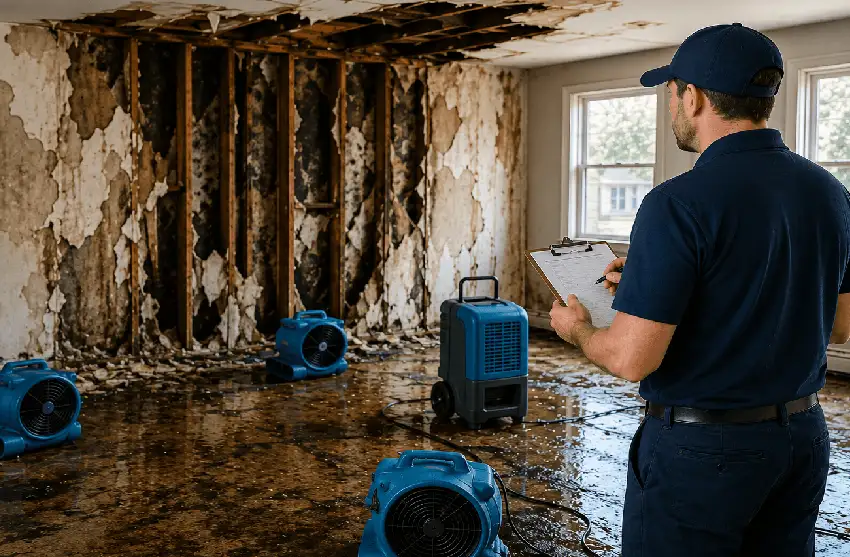
There’s a specific kind of adrenaline that kicks in when you find water pooling under the kitchen sink or smell smoke still hanging in the hallway after a stovetop fire is out. The instinct is to move fast: grab towels, open windows, pull up the soaked carpet, wipe down every sooty surface before the smell sets in. It feels productive. It feels like control, in a moment that otherwise feels like none.
That instinct isn’t wrong, exactly. Fast action genuinely matters after water or fire damage. What’s wrong is the assumption that fast and thorough are the same thing, or that a homeowner with a shop vac and a few box fans is equipped to do what a certified restoration crew does. The damage that’s visible in the first hour is rarely the damage that ends up costing the most. It’s what’s happening underneath, behind, and after that quietly turns a manageable claim into a five-figure problem.
Water Doesn’t Stay the Kind of Water It Started As
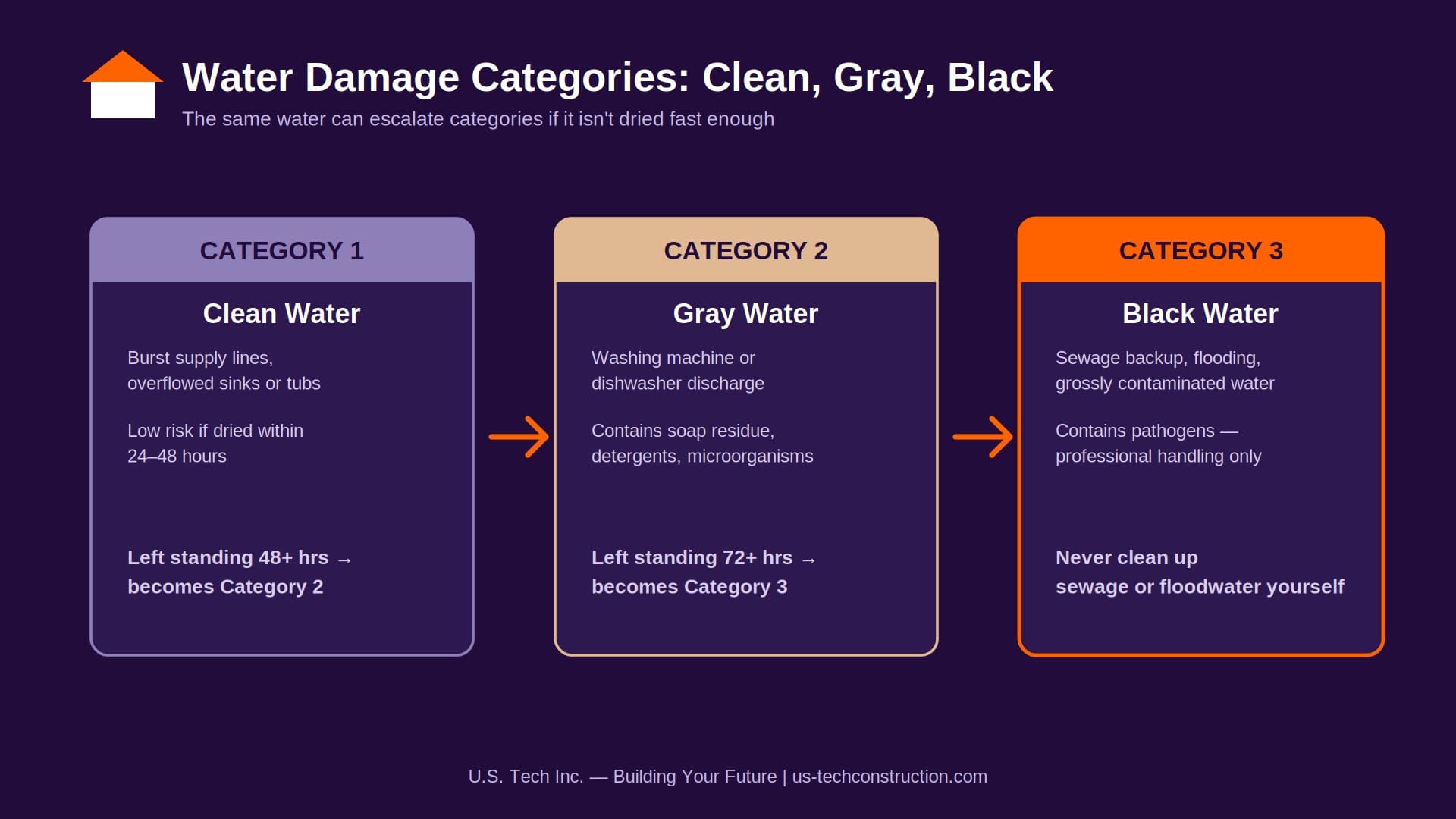
Not all water damage is equal, and the restoration industry has a formal way of saying so. The IICRC S500 standard, the reference document used by restoration companies and insurance adjusters nationwide, splits water into three categories based on contamination level. Category 1 is clean water, the kind from a burst supply line or an overflowing bathtub. Category 2 is gray water, carrying soap residue, detergents, or appliance discharge. Category 3 is black water, grossly contaminated, from sewage backups or floodwater, and it carries real pathogens.
Here’s the part most homeowners don’t realize: that classification isn’t fixed at the moment of the leak. Clean water that sits for more than 48 hours starts breeding bacteria and is treated as though it’s progressed to gray water. Gray water left untouched for 72 hours can be reclassified as black water. The clean puddle you mopped up on day one can, by day three, be functionally the same hazard as a sewage backup, even though nothing sewage-related ever happened. A homeowner who assumes “it was just a pipe, so it’s fine” is often working from information that was only true for the first two days.
This matters for DIY cleanup specifically because the right response is different for each category. Category 1 water is genuinely something a homeowner can often manage with fans, a dehumidifier, and prompt drying. Category 3 water requires protective equipment, specialized disinfection, and in many cases the disposal of anything porous it touched, because no amount of home cleaning makes sewage-contaminated drywall or carpet padding safe again.
The 48-Hour Window Most Homeowners Don’t Know They’re Racing
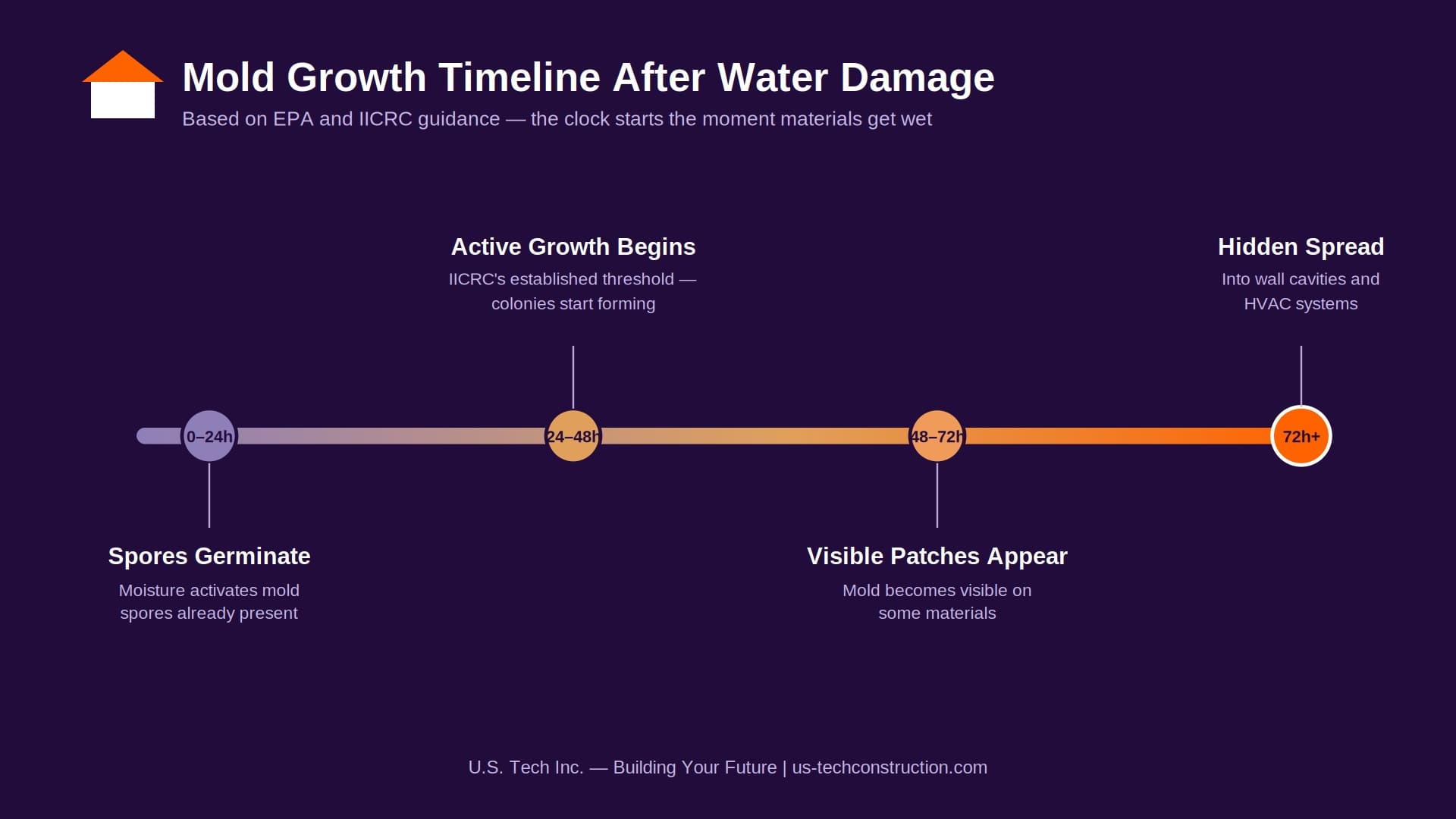
Mold is the single biggest reason “we’ll deal with it this weekend” turns into a much bigger project. According to EPA guidance, mold can begin growing on wet or damp materials within 24 to 48 hours of water exposure, and if a home can’t be thoroughly dried within that window, the agency’s own guidance says to assume mold growth has occurred. The IICRC formally marks 24 to 48 hours as the threshold where germinating spores become active colonies, and visible patches can appear on some materials within 48 to 72 hours.
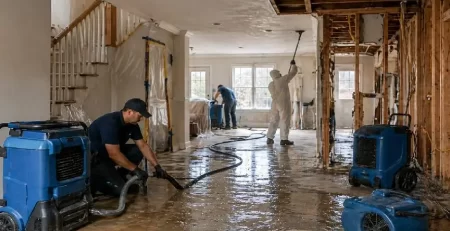
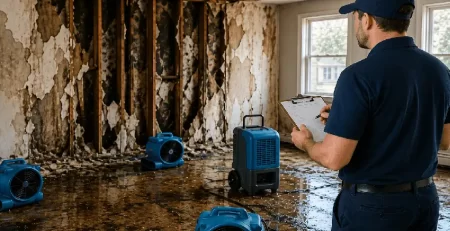
That timeline is unforgiving in a way most people don’t expect. It’s not about whether a homeowner cleans up the water, it’s about whether every bit of moisture, including what’s soaked into subfloor, insulation, and the inside of a wall cavity, is actually dried, not just wiped. A surface can look completely dry to the eye while the material underneath is still saturated, and that’s exactly the condition mold needs. This is the gap between DIY cleanup and professional mitigation: a homeowner dries what’s visible, a restoration technician measures what isn’t, using moisture meters and sometimes thermal imaging to find water that’s still sitting inside a wall three feet from where anyone can see it.
Once mold establishes itself inside a wall cavity, the cost conversation changes entirely. A water damage job that might have cost a few thousand dollars to dry and repair becomes a mold remediation job, often requiring containment, air scrubbers, and removal of structural materials that would otherwise have been salvageable.
The mold itself isn’t the only expense; the investigation needed to find every place it’s spread, and the assurance that it’s actually gone, both add real time and cost that a fast, surface-level DIY cleanup was never positioned to prevent.
Also read: What Property Damage Actually Looks Like Before Insurance Gets Involved
Fire Damage Has Its Own Clock, and It Runs Faster Than Most People Think
If water damage operates on a scale of days, fire and smoke damage operates on a scale of hours, sometimes minutes. Soot is acidic, and that acidity starts working on a home’s surfaces almost immediately. Within minutes, acidic soot residue can begin to temporarily discolor plastics and permanently stain porous materials like marble and alabaster.
Within hours, that same residue can cause bathroom fixtures and countertops to yellow and unprotected metals to start tarnishing. Within days, it begins discoloring painted walls and actively corroding metal, and by that point, silver-plated fixtures can corrode irreversibly, while glass and china can become etched and pitted beyond repair.
There’s also a chemistry problem that most homeowners have no way of diagnosing on their own. Soot isn’t uniformly acidic or alkaline; it depends on what burned. Synthetic materials tend to leave acidic residue, natural materials tend to leave more alkaline residue, and the cleaning solution used has to match, because the wrong pH doesn’t just fail to clean the residue, it can set the stain permanently.
A homeowner reaching for an all-purpose cleaner after a kitchen fire has no way of knowing which chemistry they’re dealing with, which is part of why a well-intentioned DIY cleanup attempt can do more damage than the fire’s smoke already had.
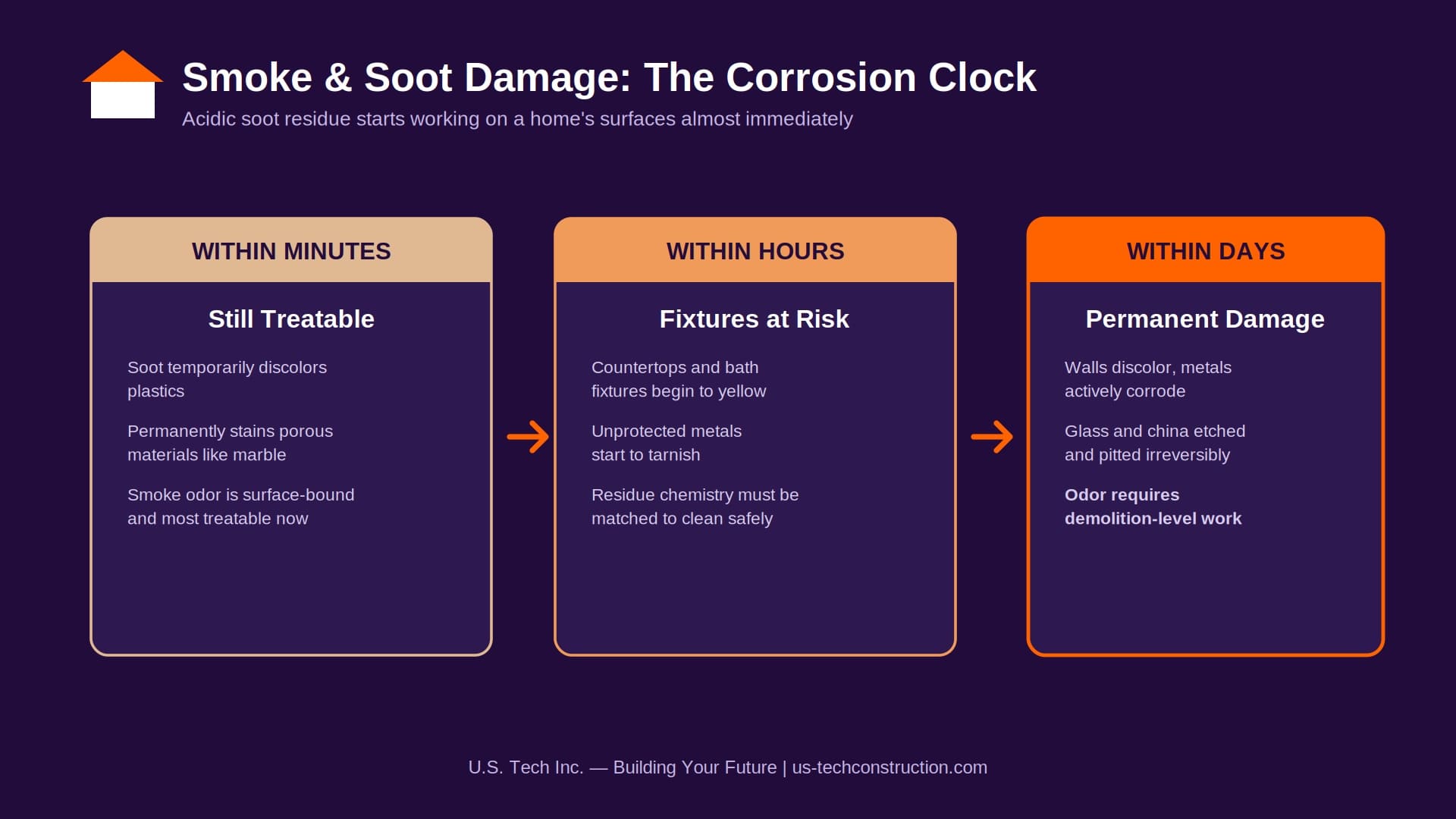
Smoke odor compounds this further. What starts as a surface-bound smell that’s genuinely treatable in the first 24 hours can, within 72 hours, penetrate deep into porous materials like drywall, insulation, and framing lumber, at which point the fix stops being odor treatment and starts being demolition.
That’s a dramatically different scope and cost than most homeowners picture when they’re airing out the house and running a box fan the morning after a fire.
Also read: What Insurance Adjusters Look for After Property Damage
What’s Actually Happening Behind the Walls
Visible damage is the easy part of this whole problem, because it’s the part a homeowner can see and respond to. The expensive part is almost always what’s hidden: water that wicked up inside a wall cavity, moisture trapped under flooring, or smoke residue that settled inside HVAC ductwork and will circulate through the house every time the furnace runs. None of that shows up from a visual inspection, and none of it responds to surface cleaning.
Structural wood is particularly unforgiving here. Framing lumber that looks dry on the outside can hold trapped moisture for weeks if it isn’t actively dried with the right airflow and dehumidification, and that sustained dampness is exactly the condition that invites both mold and long-term wood rot.
A homeowner who dries the visible surfaces and calls the job done often has no way of knowing that the studs behind the drywall are still at an elevated moisture content, quietly setting up a problem that won’t become visible again until a wall starts to feel soft or a musty smell won’t go away months later.
There’s also a safety dimension that goes beyond cost. Standing water near outlets, appliances, or a home’s electrical panel creates a real electrocution risk, and that risk doesn’t disappear just because the visible water has been mopped up; wiring and outlets that were submerged can retain damage that isn’t obvious until they fail later.
Fire damage carries a parallel issue: a fire that’s been extinguished can leave compromised electrical systems, weakened structural members, or lingering carbon monoxide risk from smoldering material inside walls, none of which a homeowner is equipped to evaluate safely on their own.
Also read: What Happens During Professional Restoration (From Damage to Repair)
The Insurance Problem Nobody Mentions Until It’s Too Late
Here’s where a well-meaning DIY cleanup can create a financial problem that has nothing to do with the original damage. Water damage is the most frequently filed homeowners insurance claim in the country, with average payouts commonly cited in the $11,000 to $14,000 range, but a meaningful share of those claims come back denied or reduced, and insufficient documentation is consistently cited as one of the leading reasons.
Most homeowners policies require prompt reporting and expect mitigation to follow a standard that an adjuster can verify. When a homeowner rips out carpet, drywall, or flooring before an adjuster or restoration company has documented the damage, there’s often nothing left for the insurer to evaluate, which puts the burden back on the homeowner to prove the extent of a loss that no longer physically exists.
Insurance adjusters are also trained to recognize what improper drying looks like, and if they conclude that a homeowner’s cleanup attempt made the damage worse rather than better, that can be grounds to reduce or deny the claim outright.
This is the quiet irony of DIY disaster cleanup: the instinct to act fast and handle it yourself, done with the best intentions, can end up working against the very claim that was supposed to cover the cost of fixing it.
A professional restoration company’s documentation, moisture readings, photos, and a clear mitigation timeline is exactly the paper trail an insurer needs to pay a claim without a fight. A homeowner working alone, in a stressful moment, rarely thinks to build that record before they start pulling up flooring.
Also read: What to do immediately after water or fire damage in your home
Where DIY Genuinely Makes Sense, and Where It Doesn’t
None of this means every drop of water or whiff of smoke requires a professional crew. A small, clean-water spill that’s caught immediately, like an overflowed sink or a short-lived appliance leak, is often well within a homeowner’s ability to dry out completely with fans, a dehumidifier, and some patience, as long as it’s truly dried within that first 24 to 48 hours and nothing porous stayed wet long enough to become a mold risk.
The line gets crossed quickly, though. Any water that’s been standing for more than a day, any water from an unknown or contaminated source, any water that’s touched drywall, insulation, or subflooring rather than just a hard surface, and any fire event beyond the smallest, most contained kitchen mishap, all move into territory where professional assessment is worth the call.
The same goes for anything involving a home’s electrical system, HVAC ductwork, or structural framing. Those aren’t areas where a confident guess is good enough, because the cost of being wrong isn’t just financial; it can be a safety risk that lingers long after the visible damage is gone.
A good rule of thumb: if the honest answer to “do I know for certain this is completely dry, several inches deep, inside the wall” is no, it’s worth a professional moisture check before calling the job finished. The same goes for smoke; if soot has settled anywhere beyond a single easily wiped surface, the acidity has likely already started working on something a visual inspection won’t catch.
What a Professional Response Actually Changes
The real value of a certified restoration company isn’t that they clean faster, it’s that they’re working from a different set of information. IICRC-certified technicians use moisture meters and thermal imaging to find water a homeowner can’t see, apply the right pH-matched cleaning agents for the specific type of soot involved, and document every step in a way that holds up with an insurance adjuster.
They know which materials can be dried and saved and which have to be removed, a distinction that, guessed wrong in either direction, either wastes money replacing something that could have been saved or leaves behind something that keeps causing problems.
That difference tends to show up most clearly after the fact, in the homes where a DIY cleanup looked complete for a few months before a musty smell returned, a wall started to feel soft, or an insurance claim came back denied for lack of documentation. The cost of professional mitigation, weighed against the cost of redoing a remodel, treating a mold problem that’s spread through a wall cavity, or losing a claim that should have been covered, usually isn’t close.
Acting Fast and Acting Right Aren’t the Same Thing
Speed matters after water or fire damage, but speed without the right assessment just moves a home toward a bigger problem more efficiently. The water that looks clean on day one, the soot that wipes away on the surface, and the smell that seems to be fading, can all be setting up exactly the kind of hidden, expensive damage this guide has walked through, mold inside a wall, corroded fixtures, a denied insurance claim, long before any of it is visible again.
As a remodeling and restoration contractor in Michigan, US Tech Inc. has spent over 30 years helping Oakland County homeowners respond to water and fire damage the right way, from the first assessment through documentation an insurance adjuster can actually act on. If your home has standing water, smoke damage, or you’re simply unsure whether what you’re looking at is more than it seems, call (248) 729-2411 before you start pulling anything up.
Sources
- EPA: Ten Things You Should Know About Mold
- Cleanfax: How Long Does It Take Mold to Grow?
- PuroClean: Toxic Truths About Smoke Damage
- Disaster 911: Is Soot Acidic or Alkaline?
- CleanLink: ANSI/IICRC S700 Standard for Fire and Smoke Damage Restoration
- Water Damage Categories and Classes, IICRC S500 Reference
- Insurance Claims for Water Damage: Documentation and Timelines
- Noble Public Adjusting Group: Critical Aspects of a Water Damage Restoration Claim

Leave a Reply