
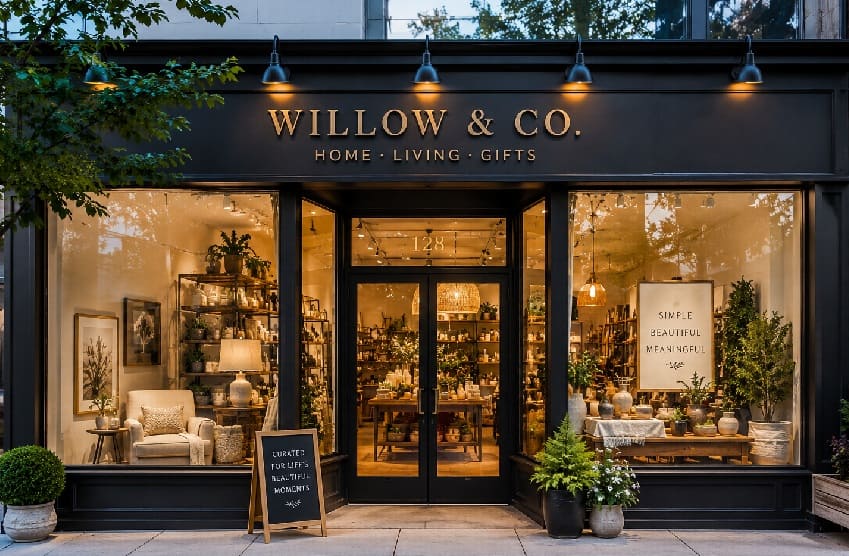
Retail Remodeling in Michigan: How Design Drives Customer Purchases
Walk into two boutiques selling the exact same handbags. One has flickering fluorescent tubes, beige walls, and a checkout counter blocking the door. The other has warm layered lighting, a clear sightline to the register, and a window display that makes you stop on the sidewalk. You already know which one you’re buying from — and so does every customer who walks past both.
That instinct isn’t just taste. It’s backed by hard data. A landmark study by the Heschong Mahone Group found that stores with high-quality daylighting and lighting design saw sales as much as 40% higher than comparable stores without it — a finding so strong researchers reported 99% statistical certainty behind the number. For Michigan retailers, showroom owners, and boutique operators competing against Amazon on one side and a redesigned strip-mall neighbor on the other, that’s not a marginal edge. It’s the difference between a store customers browse and one they buy from.
This guide breaks down how retail remodeling in Michigan — from lighting and layout to flooring and storefront design — directly drives customer purchases, with specific guidance for boutiques, specialty retail, and automotive showrooms. Whether you’re working with a full-service commercial remodeling and construction company or planning a phased upgrade, the principles below apply at any budget.
Why Retail Design Is a Sales Strategy, Not a Décor Choice
Retailers tend to think of remodeling as maintenance — fix the worn carpet, repaint before it looks dated. But commercial design researchers see it differently. Retail store design directly shapes what’s called the path to purchase: the sequence of decisions a shopper makes between walking in the door and walking out with a bag.
Industry research on store layout identifies four measurable levers that design touches directly:
- Traffic — how many potential buyers your storefront, windows, and entrance pull in off the street
- Conversion — the percentage of visitors who actually make a purchase, driven by layout, signage, and merchandise presentation
- Units per transaction — how many items a shopper adds to their basket, influenced by how merchandise is grouped and displayed
- Average sale value — the dollar amount per transaction, shaped by how premium or accessible the space feels
Academic research backs this up in more granular ways, too. Studies on visual merchandising have found that store layout, merchandise presentation, and shelf display significantly impact purchase behavior, particularly for higher-involvement purchases like electronics, furniture, and vehicles — exactly the categories where Michigan specialty retailers and showrooms compete hardest. Other research has shown that simply increasing the physical space between displayed products improves how customers perceive both the product’s quality and the store’s overall prestige — a detail that costs nothing but square footage to test.
In other words, design isn’t the finishing touch on a retail business. For many Michigan store owners, it’s the single highest-leverage investment available short of adding new inventory.
Lighting: The Highest ROI Remodel in Retail
If you remodel only one thing, lighting is the place economists and retail designers agree delivers the fastest payback. Beyond the Heschong Mahone Group’s 31–49% sales lift finding, retail lighting research consistently points to a few specific mechanisms:
- Even illumination increases sales by eliminating dark spots and shadows that make products harder to evaluate and subconsciously signal a neglected space
- Color temperature changes perception — cooler, brighter light (4000K+) makes electronics and metallics pop, while warmer light (2700–3000K) flatters apparel, leather goods, and boutique merchandise
- Accent lighting on featured products draws the eye exactly where a retailer wants it, functioning as a silent salesperson that highlights margin-friendly items
- Lighting quality reduces returns — when customers can fully evaluate color, texture, and quality in-store, they’re less likely to be disappointed and return the item later
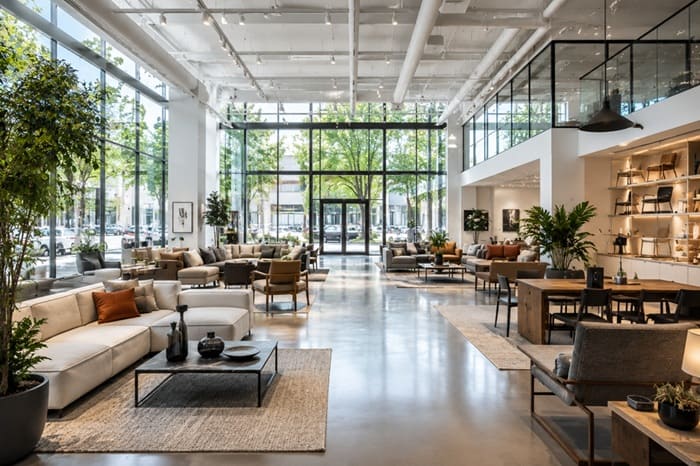
For Michigan retailers specifically, lighting does double duty. Between November and March, natural daylight hours shrink dramatically — meaning a store’s artificial lighting design carries the full weight of the shopping experience for nearly half the year. A layered lighting plan (ambient, task, and accent lighting working together, rather than a single bank of overhead fluorescents) keeps a Michigan storefront feeling warm and inviting through the darkest months, when foot traffic is hardest to earn.
Store Layout: Guiding the Path to Purchase
Layout is where remodeling decisions either open a store up or quietly choke off sales. Retail planning research is direct about the goal: an effective layout balances selling space with support space, creates a positive customer experience, and guides shoppers to see the full range of merchandise in a logical, unforced sequence.
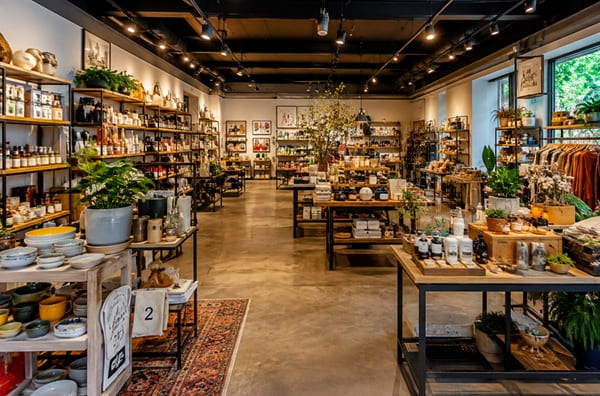
A few evidence-backed layout principles that translate directly into a remodel plan:
- Decompression zones matter — the first several feet inside the entrance should be open and uncluttered, giving shoppers a moment to adjust before engaging with merchandise
- Sightlines to the register reduce anxiety — customers browse more freely when they can see where checkout is without wandering to find it
- Wider aisles change how products are perceived — research shows that added space between products enhances perceived quality and store prestige, an especially useful lever for boutiques competing on brand feel rather than price
- Perceived crowding drives impulse behavior — a well-designed layout manages the emotional experience of the space itself, which studies link directly to satisfaction and purchase intent
For boutiques and specialty retailers in particular, a remodel that reworks fixture placement, widens key aisles, and creates a clear entry-to-checkout flow often outperforms a full inventory refresh at a fraction of the cost.
Storefronts and Windows: Winning the Sale Before Anyone Walks In
Retail planning research is blunt about this: traffic is potential sales, and storefronts, windows, entrances, and signage are what pull that traffic in off the sidewalk. For Michigan retailers on high-visibility corridors — Woodward Avenue, Main Street districts, strip retail along Rochester Road — the storefront is doing marketing work every hour the store is open, whether it’s staffed or not.
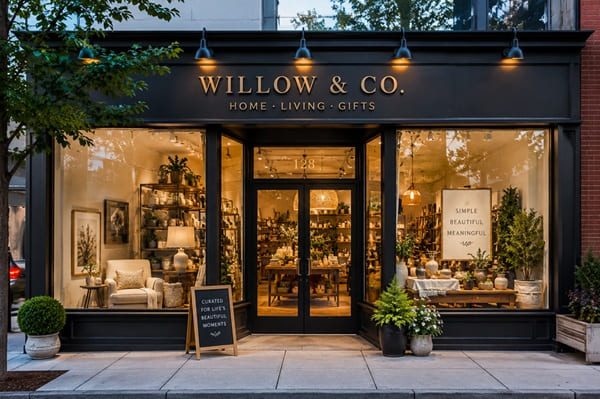
A storefront remodel that pays for itself typically addresses:
- Window display sightlines — is the display visible and legible from a moving car, not just a parked one?
- Entrance friction — heavy doors, awkward thresholds, or poor sightlines into the store discourage the casual walk-in that boutiques depend on
- Facade lighting for winter months — Michigan’s early winter darkness means a storefront that looks closed by 5:30 pm is losing evening foot traffic it doesn’t have to lose
- Seasonal weatherproofing — covered entries and proper drainage keep a storefront inviting during Michigan’s slush and snow season instead of looking neglected
Automotive Showrooms: A Different Design Problem With the Same Stakes
Vehicle purchases are higher-involvement, higher-dollar, and higher-emotion than nearly any other retail category — which makes showroom design even more consequential than a typical storefront remodel. The industry itself is signaling exactly how much this matters right now.
Ford’s new “Signature 2.0” dealership standard — a hospitality-inspired redesign built around open floor plans, flexible customer spaces, and a seamless move between online research and in-person visits — is debuting its first Michigan location at Skalnek Ford in Lake Orion in 2026. That’s a major automaker putting real capital behind the belief that showroom environment directly affects whether a research-stage shopper converts into a buyer.
Luxury dealerships have been proving the same principle for years. A Pittsburgh-area BMW dealership’s $15 million showroom renovation — featuring an open-floor layout, vaulted ceilings, natural light, and a glass-enclosed vehicle delivery bay — was explicitly designed to create what the dealership called a “no-pressure sales environment,” on the logic that a showroom customers want to linger in is a showroom that closes more deals.
For Michigan automotive showrooms and dealerships planning a remodel, the highest-impact elements tend to be:
- Open, glass-forward architecture that maximizes natural light and lets vehicles read as the visual centerpiece rather than competing with clutter
- Flexible customer lounge areas that support the now-standard hybrid buying journey — research online, finalize in person
- Dedicated delivery or reveal spaces that turn the final handoff into a memorable moment rather than a paperwork transaction
- Service-area separation so the sales showroom stays a showroom, not a spillover space for parts and repair traffic
With over 1,000 dealership segments now competing on data-driven customer targeting, the physical showroom experience is one of the few differentiators a competitor can’t copy by adjusting an ad budget.
Flooring, Materials, and the Sensory Experience of a Sale
Retail design research increasingly treats a store as a full sensory environment, not just a visual one. Flooring, material choices, and finishes shape how “premium” a space feels — and pricing psychology research consistently shows that perceived quality of environment influences what customers are willing to pay without a single price tag changing.
Practical considerations for a Michigan retail remodel:
- Durable, low-maintenance flooring that handles Michigan’s road salt and slush without looking worn within a single winter
- Material transitions that signal zones — a shift in flooring or wall finish helps shoppers subconsciously understand they’ve moved from browsing to checkout, or from a general area to a premium collection
- Acoustic treatment — an overly echoey or overly muffled space affects comfort in ways customers feel but rarely name directly
Planning a Retail Remodel: Where to Start
Few retailers have the budget or the appetite to remodel everything at once, and a phased approach is usually the right call. A typical sequence for Michigan boutiques, specialty retailers, and showrooms looks like:
- Lighting redesign — the fastest, most cost-effective upgrade with the clearest sales research behind it
- Storefront and entrance improvements — capturing more of the foot and drive-by traffic already passing the door
- Layout and fixture reconfiguration — improving flow, sightlines, and perceived merchandise quality
- Flooring and finish upgrades — refreshing the sensory experience and long-term durability of the space
Every phase benefits from working with experienced commercial renovation contractors in Michigan who understand the state’s commercial building codes, seasonal material demands, and the realities of remodeling a space that has to stay open — or reopen fast — during construction.
Work With a Michigan Commercial Remodeling Contractor
US Tech Inc. has served Michigan businesses since 1992, providing commercial remodeling for retail stores, boutiques, showrooms, and specialty retail spaces across the state. Our team understands how design decisions translate into customer behavior — and how to execute a remodel around a business that needs to keep its doors open.
If you’re planning a retail remodel designed to convert more browsers into buyers, contact US Tech Inc. for a consultation, or explore our commercial remodeling services in Michigan
Sources
- Heschong Mahone Group, 2003 Retail Lighting and Sales Study
- Academic research on visual merchandising and purchase behavior (Academia.edu, Retail Store Layout research collection)
- ICSC / “Getting Retail Right” — Retail Store Planning and KPI research
- International Review of Management and Marketing — Effect of Store Design on Perceived Crowding and Impulse Buying Behavior
- Ford Motor Company — Signature 2.0 Dealership Standard announcement, 2026
- A&L Motor Sales BMW/Jaguar/Land Rover showroom renovation announcements






Leave a Reply