
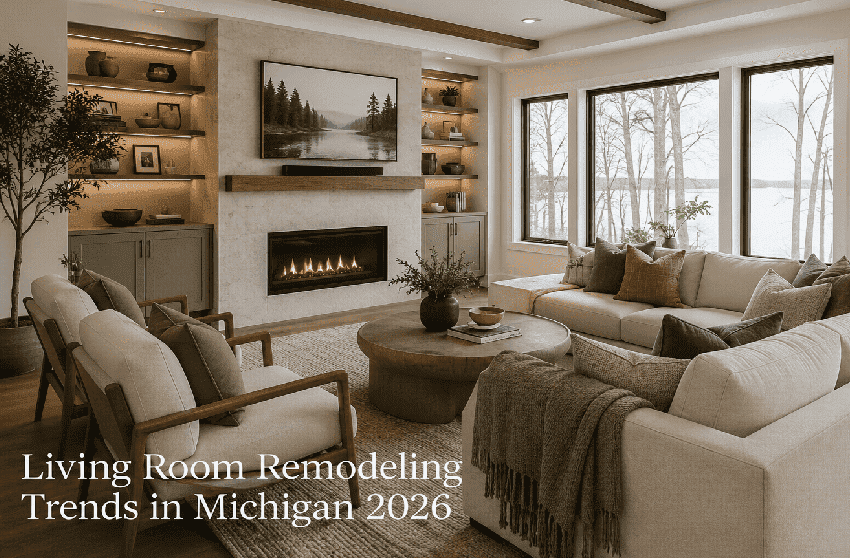
Living Room Remodeling Trends in Michigan 2026
Living rooms are becoming more intentional in 2026. Across Michigan, homeowners are remodeling spaces to feel calmer, more functional, and easier to live in throughout changing seasons. Instead of chasing short-term design trends, many homeowners are prioritizing comfort, flexibility, durability, and layouts that support everyday routines.
Current renovation data reflects this shift. According to the 2026 U.S. Houzz & Home Study,
50% of homeowners planned renovation projects in 2026, reflecting continued investment in improving existing homes despite changing economic conditions.
At the same time, design preferences are moving toward warmer interiors, layered textures, flexible layouts, and spaces that feel more personal rather than overly formal.
Recent Houzz trend reports and interior design publications for 2026 show growing interest in natural materials, layered textures, curved architectural details, and softer lighting environments designed to create calmer and more comfortable living spaces.
In Michigan homes, living room remodeling is also influenced by climate, natural light considerations, and the growing desire to create spaces that feel comfortable during long winters without becoming visually heavy.
For many homeowners working with home renovation contractors in Michigan, the focus is no longer simply updating finishes. The larger goal is to improve how the living room functions throughout the day and year.
Living Rooms Are Becoming Softer and More Relaxed
One of the clearest living room remodeling trends in Michigan for 2026 is the shift away from rigid layouts and overly formal spaces. Homeowners are creating living rooms that feel easier to use daily, rather than rooms designed primarily for appearance.
Instead of sharp contrasts and highly staged interiors, many remodeled spaces now include:
- warmer neutral color palettes
- textured fabrics and layered materials
- curved furniture profiles
- natural wood finishes
- mixed lighting sources
- comfortable seating arrangements
These choices create spaces that feel visually softer without becoming overly decorative. This trend works especially well in Michigan homes where natural light levels shift significantly between seasons.
Many residential remodeling companies in Michigan are also seeing homeowners move toward quieter material palettes that age well over time rather than trend-focused interiors that may feel dated quickly.
Natural Light Is Influencing More Remodeling Decisions
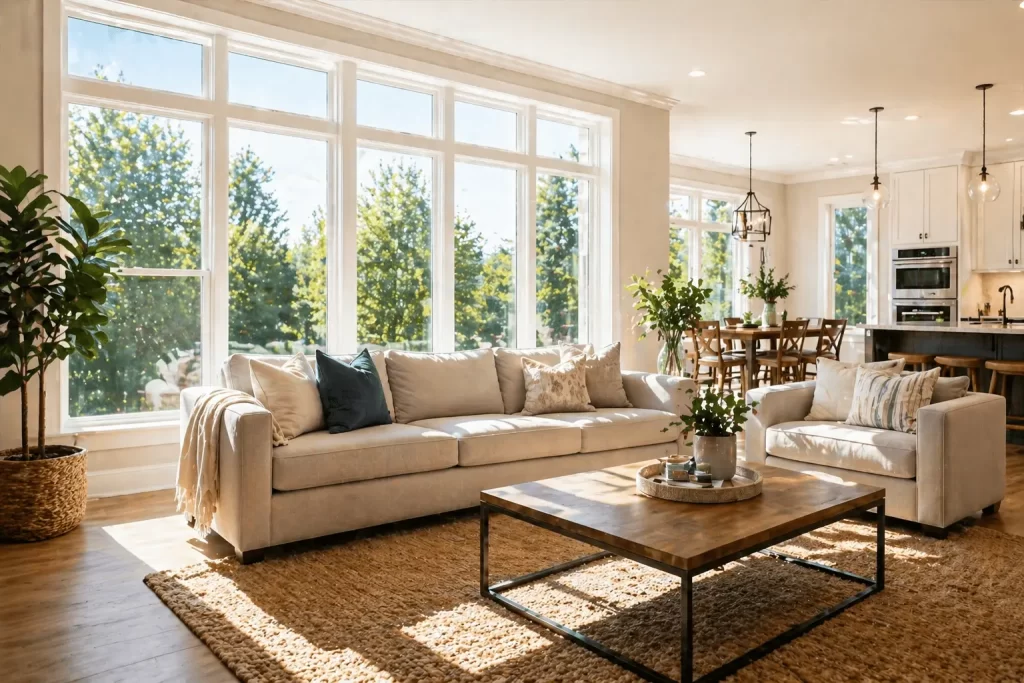
Natural light continues shaping how homeowners approach living room remodeling in Michigan. In older homes especially, living rooms were often designed with more segmented layouts, smaller windows, and darker transitions between spaces.
Rather than completely removing walls, many remodeling projects now focus on improving how light moves throughout the home.
This may involve adjusting room openings, widening transitions between spaces, updating window configurations, or selecting materials that reflect light more evenly during winter months.
Homes that distribute natural light more effectively tend to feel larger and calmer even when square footage remains unchanged.
For homeowners planning broader home remodeling projects in Michigan, living rooms are increasingly being treated as part of the overall circulation and lighting strategy of the home rather than isolated spaces.
Built-In Storage Is Becoming More Integrated
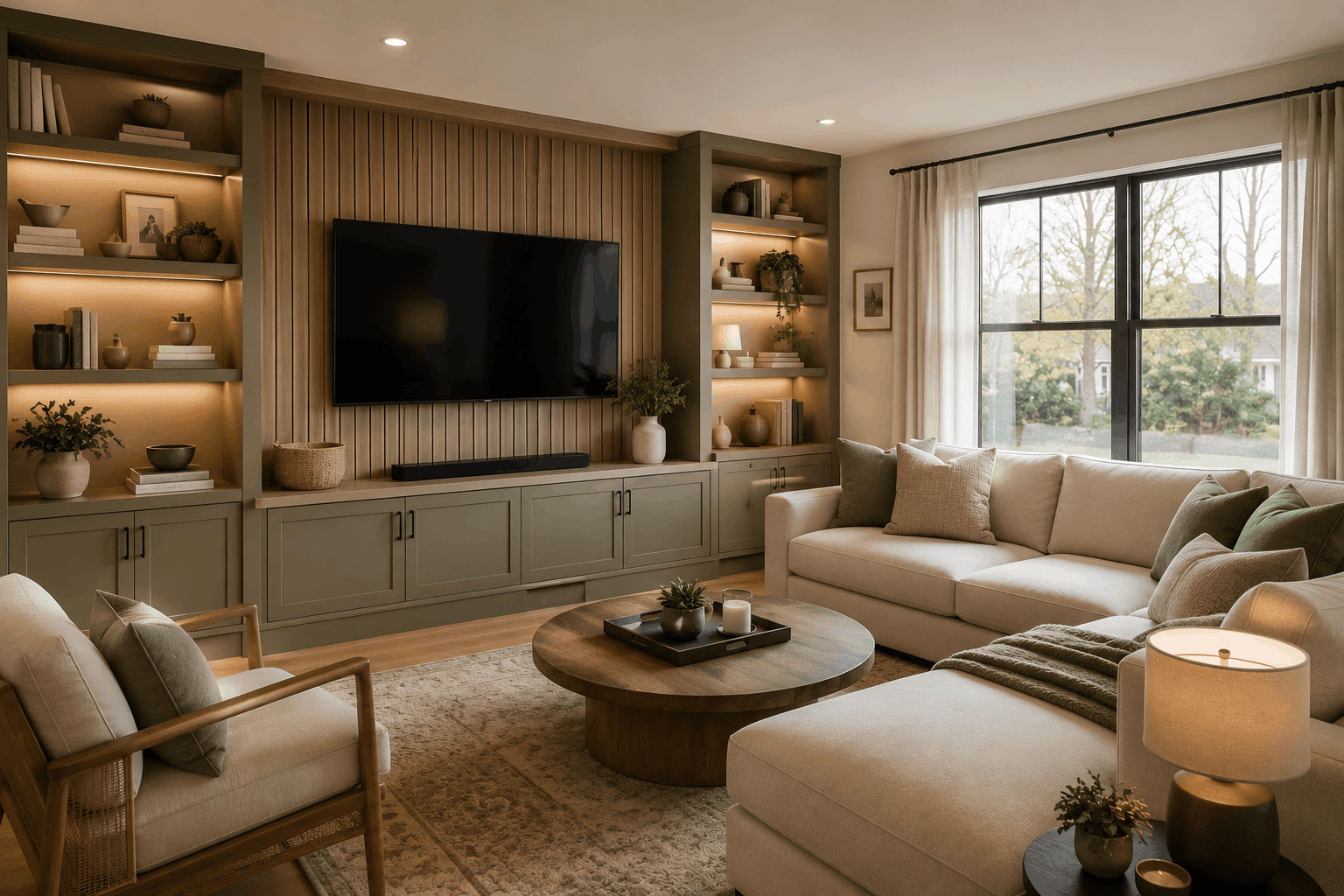
Another noticeable trend in 2026 is the move toward integrated storage solutions inside living rooms.
Homeowners want spaces that feel visually organized without relying heavily on freestanding furniture. Built-in shelving, media walls, hidden storage cabinetry, and integrated seating are becoming more common in both newer homes and older Michigan properties.
This shift is partly practical. As more homeowners spend long periods at home, living rooms are expected to support multiple functions throughout the week, including entertainment, reading, remote work, and family gatherings.
At the same time, integrated storage helps simplify visual clutter, which contributes significantly to how calm and cohesive a space feels.
Michigan Homeowners Are Prioritizing Comfort During Winter Months
Climate plays a larger role in home remodeling in Michigan than many national trend reports fully acknowledge.
Because living rooms are used heavily during colder months, homeowners are increasingly prioritizing comfort-focused remodeling decisions that improve how the space feels physically throughout winter.
This includes:
- improved insulation around windows and exterior walls
- warmer flooring materials
- layered lighting systems
- fireplace redesigns
- acoustic improvements
- energy-efficient window upgrades
These improvements may not always create dramatic visual transformations, but they often improve the daily living experience significantly over time.
Many homeowners working with a best remodeling company in Michigan are also focusing on remodeling decisions that improve long-term comfort and energy efficiency rather than purely cosmetic upgrades.
Living Rooms Are Becoming More Flexible
One of the biggest lifestyle shifts influencing living room remodeling trends in 2026 is flexibility.
Living rooms are no longer expected to serve only one purpose. Many homeowners now want spaces that can adapt naturally throughout the day without feeling overly programmed.
Instead of designing around a single focal point, remodels increasingly consider how the room supports multiple activities comfortably.
This includes creating:
- reading areas near windows
- conversation-focused seating layouts
- spaces for quiet work or relaxation
- better transitions between kitchen and living areas
- improved traffic flow throughout the home
This trend is particularly important in small home remodeling projects in Michigan, where improving functionality often matters more than increasing square footage itself.
Texture Is Replacing Excessive Contrast
In previous years, many interiors relied heavily on strong black-and-white contrasts or highly polished finishes. In 2026, living room remodeling trends are moving toward more layered and tactile interiors.
Homeowners are incorporating:
- limewash and textured wall finishes
- natural stone accents
- wood paneling details
- woven materials
- soft matte surfaces
- mixed organic textures
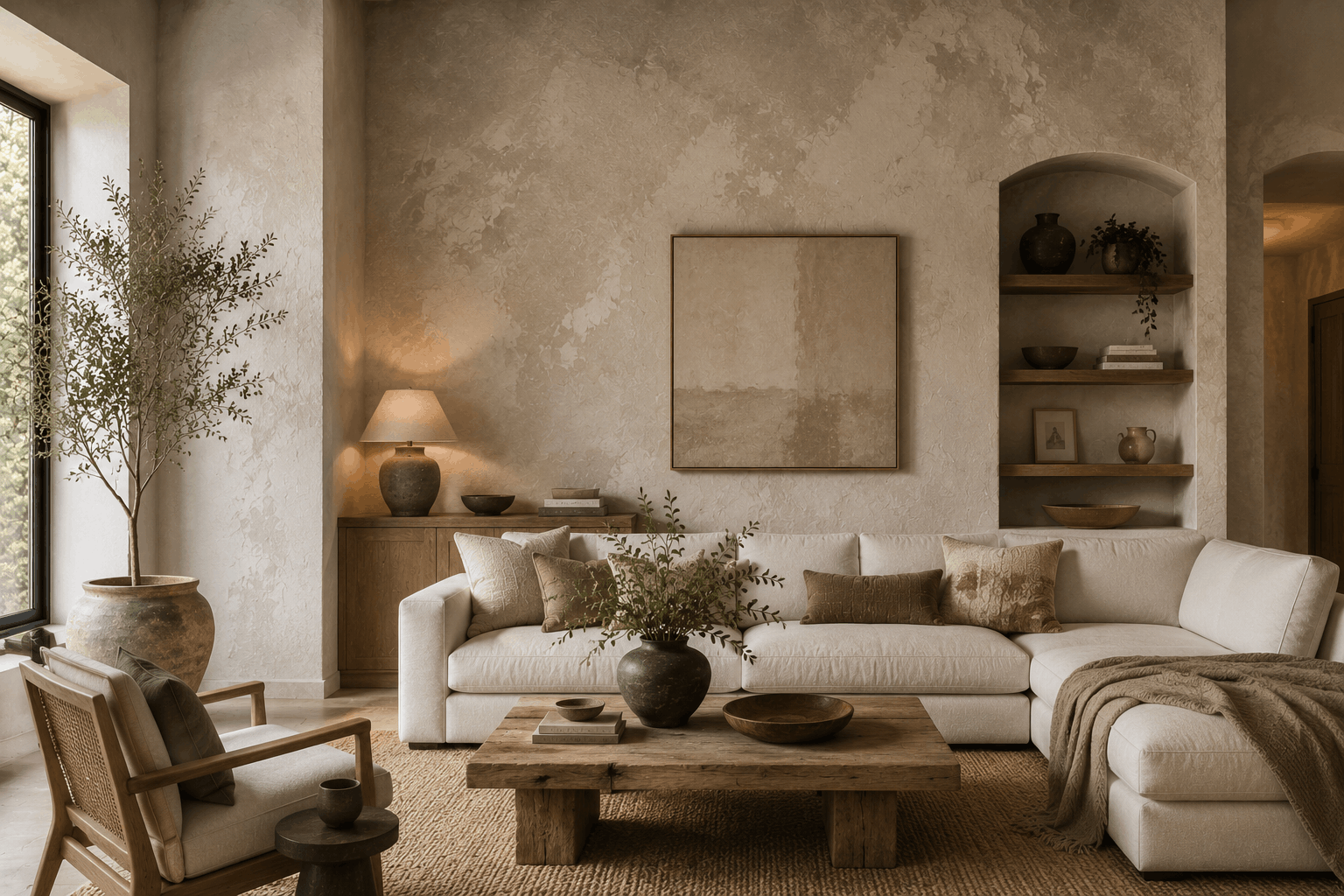
These materials create visual depth without making the room feel overly busy.
Trend reports from Houzz and interior design publications also show growing interest in warmer earth tones, curved architectural details, and more collected interiors rather than highly uniform spaces.
Older Michigan Homes Continue Influencing Remodeling Decisions
Many Michigan homes were built decades ago, and their layouts continue shaping current remodeling trends.
Older homes often contain smaller living rooms, compartmentalized layouts, limited lighting distribution, and older insulation systems. As a result, remodeling projects frequently focus on improving openness and comfort without removing the architectural character of the home itself.
For many homeowners, the goal is not to turn an older home into a completely modern structure. Instead, the focus is on helping the home function more naturally for current living patterns while preserving the qualities that make the property distinctive.
This approach aligns closely with broader remodeling trends in 2026, where homeowners are prioritizing longevity, comfort, and thoughtful upgrades over fast-moving design trends.
Homeowners considering larger renovations often begin by understanding why older Michigan homes require a different remodeling approach before planning structural or layout changes.
Technology Is Becoming Less Visible
Another interesting shift in 2026 is that technology inside living rooms is becoming more integrated and less visually dominant.
Rather than designing rooms entirely around televisions or visible electronics, homeowners are incorporating technology more subtly through:
- hidden media storage
- integrated sound systems
- smart lighting controls
- cleaner cable management
- minimal visual clutter
This reflects a broader design movement toward calmer interiors and more balanced living environments.
Recent housing and lifestyle reports also show growing interest in spaces designed for reading, conversation, and lower digital stimulation inside the home.
Conclusion
Living room remodeling trends in Michigan for 2026 are less focused on dramatic visual change and more focused on improving how homes feel and function over time.
Homeowners are prioritizing comfort, flexibility, natural light, storage integration, and materials that create a more grounded and livable environment throughout the year.
In many cases, the most successful remodels are not necessarily the most visually dramatic. They are the projects that quietly improve everyday routines, circulation, lighting, comfort, and long-term usability.
As more homeowners continue investing in thoughtful renovations instead of moving, living rooms are increasingly becoming spaces designed around daily life rather than short-term design trends.
For homeowners planning a living room remodel in Michigan, the strongest remodeling decisions in 2026 are likely to be the ones that improve how the space supports everyday living for years to come.

Leave a Reply